

Surgical Concerns and the Psychological Preparation Process
It is perfectly natural for patients to feel anxious and worried before any cosmetic procedure. Especially when it comes to the eyebrows—which are located right in the center of the face and directly shape our facial expressions—pre-operative anxiety can reach its peak. Thoughts swirling in patients’ minds—such as pain, swelling, bruising around the eyes, an unnatural appearance, or being cut off from social life for days after the procedure—are described in the medical literature as Fears About Eyebrow Transplants ...and leads patients to postpone treatment. However, the vast majority of these concerns lack a scientific basis and stem from hearsay.
At our clinic, led by Dr. Handan Yavuz, we not only prepare our patients physically for surgery, but we also help them feel mentally at ease by explaining the physiological realities behind their fears. Advanced shave-free Long FUE This technique is the best antidote to these fears. Not shaving the donor and recipient areas, the use of micro-instruments, and the immediate aesthetic results provided by long-follicle transplantation minimize our patients’ stress during the procedure and transform the process into an extremely comfortable experience.
For more detailed information about the process and scientific clarifications of common misconceptions, Myths About Eyebrow Transplants You can review our guide. As for your concerns about naturalness, Natural-Looking Eyebrow Transplant You can take a look at our article where we examine these standards.
The Most Common Fears About Eyebrow Transplants and the Scientific Facts
Let’s take a detailed look at the concerns our patients most frequently express before surgery and their medical explanations:
1. “Will I Be in a Lot of Pain During and After the Surgery?”
One of patients' greatest fears is experiencing physical pain. Eyebrow transplant surgeries, local anesthesia The procedure is performed under local anesthesia. The anesthetic is administered to the skin using very fine needles or needle-free pressurized anesthesia devices. During the procedure, patients experience only a mild pricking sensation lasting 1–2 minutes.
Once the skin is completely numb, the patient will feel absolutely no pain or discomfort throughout the procedure (3–5 hours). Any mild soreness that may occur after the procedure is completely alleviated by simple pain relievers prescribed by our doctor.
2. “Will my eyes swell up so much that they close? Will I get bruises?”
During the procedure, a special fluid (tumescent solution) is injected to help the local anesthetic spread under the skin and to prevent bleeding. Due to the effects of gravity, this solution may migrate toward the forehead and the area around the eyes during the first 2–3 days after the procedure, causing temporary swelling. Complete closure of the eyes or severe bruising are very rare and are usually caused by improper technique. Thanks to the specialized injection techniques we use at our clinic, post-procedure cold compress (ice) protocols, and the rule of sleeping with the head elevated for the first 3 days, swelling is kept to a minimum and is completely absorbed by the lymphatic system starting on the 3rd day.
3. “Will I Be Unable to Go to Work for Weeks After the Procedure?”
With traditional shaving methods, patients may choose to withdraw from social life due to the appearance of the donor area and the heavy scabbing on their eyebrows. However, since the Long FUE technique does not involve shaving, the donor area is concealed among the existing hair.
The long hair strands implanted in the eyebrow area camouflage the micro-scabs. The day after the procedure, you can participate in any social activities you wish and return to work. No one will realize you’ve had a procedure.
Comparison Table of Fears, Their Causes, and Clinical Solutions
The table below summarizes the fears patients have, their biological causes, and the modern solutions we implement at our clinic:
| Patient Fear / Anxiety | Biological Cause (Actual) | Solutions and Precautions at Our Clinic | The Difference with the Long FUE Method |
|---|---|---|---|
| Pain and Soreness | Stimulation of nerve endings. | Next-generation local anesthesia protocol and ultra-fine needles. | Rapid numbing and a comfortable, pain-free experience throughout the procedure. |
| Edema and Swelling | The anesthetic solution draining toward the eyes due to gravity. | Optimizing fluid intake, applying ice, and sleeping on a high pillow. | Rapid drainage of fluid from the skin through microchannels. |
| Artificial Appearance | Implanting the hair at the wrong angle (perpendicular). | Golden ratio design and planting at parallel angles of 10–15 degrees. | Long hair roots allowing for the determination of the direction of the curve and bend in real time. |
| Leaving a Trace | Making deep incisions or using stitches. | Use of 0.6–0.7 mm metric punch tools; seamless cutting. | Micro-dots on the back of the neck and eyebrows that heal completely in 7–10 days. |
| Infection | Bacteria seeping into the ducts due to a compromised skin barrier. | Sterile operating room conditions, post-procedure antibiotics, and cleansing lotion. | Because the channels are very small, there is a quick close and low risk. |
The Reliability of Information and EEAT Standards in Overcoming Fears
The most effective way to overcome fears about eyebrow transplantation is to get accurate information from a trusted and experienced physician. At our clinic, we conduct a detailed, free consultation with our patients before the procedure to ensure transparency throughout the entire process. Every step—from the equipment used to the examination of grafts under a microscope—is managed in accordance with medical standards.
It is important to remember that a successful procedure depends not only on technical skill, but also on professional communication that helps the patient feel at ease. To learn more about the aesthetic flaws and recovery challenges associated with older methods, Classic FUE eyebrow transplant You can check our page.
Preoperative Steps to Reduce Anxiety
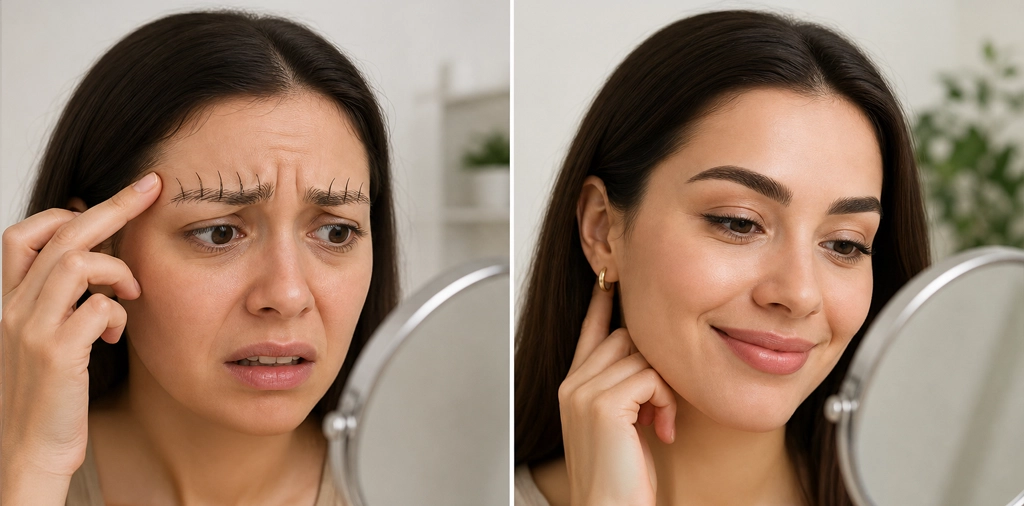
Fears about eyebrow transplants are often fueled by a lack of knowledge. A patient who understands the process step by step experiences a significant reduction in anxiety. That’s why, during the initial consultation, we clearly explain every stage of the procedure, what you’ll feel, and how the recovery process will unfold.
There is a simple but effective method I use in my clinic: having the patient review before-and-after records of similar cases I’ve treated in the past. Seeing the actual results helps replace exaggerated mental scenarios with realistic expectations.
Arriving on the day of your procedure well-rested and having avoided coffee and heavy meals will positively affect both your comfort and fluid retention. Even bringing along a playlist of your favorite music can help make the process more relaxing for you.
We’d like you to share your concerns rather than keep them to yourself. Once we know what you’re unsure about, we’ll provide a detailed explanation on that specific point and guide you through the process together. Knowledge is the simplest antidote to fear.
The Truth Behind Fears: Experience and Observation
Most fears surrounding eyebrow transplants stem from negative examples of procedures performed under uncontrolled conditions. When the procedure is performed by an experienced team in a sterile clinical environment, most of these scenarios are already ruled out.
Post-operative follow-up also reinforces this sense of confidence. Knowing in advance what to expect each day eliminates the feeling of being caught off guard by an unexpected situation.
At my clinic, I make it a priority not to leave my patients on their own; you can reach out to us with any questions that come to mind throughout your recovery. This accessibility is the most powerful factor in quietly alleviating most patients’ anxiety. Fear is often just another name for the unknown; when the process is transparent, fear gives way to trust.
The healthiest way to overcome fears about eyebrow transplants is to go through the process with a team, not on your own. A clinic that is by your side from the initial consultation through the final days of recovery naturally alleviates most of your concerns.
Being able to ask even the smallest question that comes to mind without hesitation ensures that the process is predictable for you. When you share your fears, we address them with scientific explanations rather than ignoring them. This transparent approach helps you feel much more at ease on the day of the procedure.
Frequently Asked Questions
When performed in a sterile clinical setting by a qualified physician, the risks of eyebrow transplantation are minimal. In rare cases, temporary itching, mild redness, and swelling may occur; these symptoms resolve on their own within 7 to 10 days.
No, bruising is definitely not a complication. In patients with sensitive, fair skin, mild yellowish discoloration may rarely occur, but this resolves completely on its own within 3–5 days.
The anesthesia used in eyebrow transplantation is local, meaning it affects only the skin in the eyebrow and nape areas. Unlike general anesthesia, it has no systemic effects and does not harm the heart or brain. In patients with systemic conditions, the dosage is carefully adjusted by the physician.
In short-term, microsurgical procedures such as eyebrow transplantation, general anesthesia is not preferred because it carries unnecessary risks. Local anesthesia is entirely sufficient to ensure the procedure is comfortable.
Yes. During the healing process (especially in the first 3–7 days), it is perfectly normal to experience mild itching as the skin regenerates and scabs peel off. You should avoid scratching the eyebrow area with your fingernails; instead, use moisturizing solutions to relieve the itching.
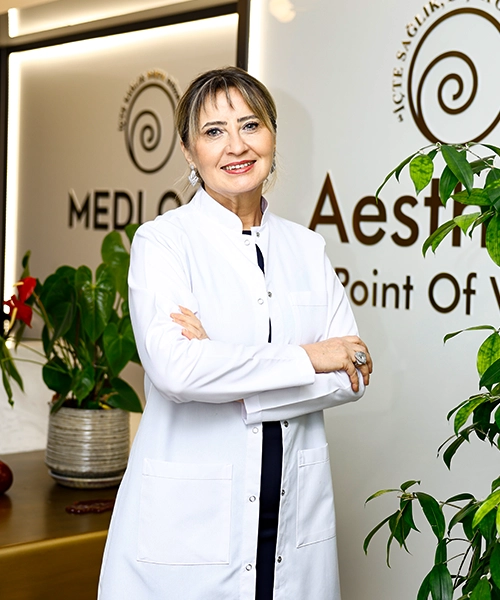
Dr. Handan Yavuz
MAKE AN APPOINTMENT