

Eyebrow Transplant Donor Area Healing - The Unseen Hero in Eyebrow Transplant Operations: Donor Area
When planning an eyebrow transplant operation, almost all patients focus on the area to be transplanted, the eyebrow design and the healing process here. However, the main pillar of a successful eyebrow restoration is the donor area where the roots are supplied.
Eyebrow transplantation donor area healing, which directly determines the success rate, proceeds smoothly with the right care protocols. The health of the hair follicles in the donor area, their removal with the right technique and the quality of healing after the operation directly determine both the success of the eyebrows and the integrity of your existing hair. Here is one of the most curious issues in this process eyebrow transplant donor site healing, is a physiological process that directly affects the postoperative comfort of patients.
Meticulously applied by Dr. Handan Yavuz in our clinic Long FUE (unshaven, long root eyebrow transplantation) technique minimizes aesthetic concerns by allowing the operation without shaving the hair in the donor area. Unlike traditional methods, this method does not leave any shaven patches or suture marks on the nape of the neck, allowing patients to continue their social and professional lives without interruption. In this comprehensive guide, we will discuss the physiological characteristics of the donor area, the healing stages, how to protect your nape hair, and the scientific rules you should pay attention to throughout the process.
What is the Donor Area? Reasons for Choosing Nape Hair
In eyebrow transplantation, the nape area between the two ears (occipital area) and the hair strands behind the ear are generally preferred as the donor area. Hair in this area folliclescientific rationale behind their selection:
- Genetic Resistance (Non-Shedding): Hair follicles in the nape are genetically resistant to the hormone dihydrotestosterone (DHT). In this way, they become permanent for a lifetime in the new area where they are transplanted.
- Density and Health: The roots in the occipital region are usually thicker, highly nourished and active.
- Tissue Compatibility: The single follicles of the hair in this region are the hairs that can most easily adapt to the eyebrow hair form in terms of diameter and structure.
For eyebrow transplantation to be natural, it is necessary to harvest hair follicles from the donor area homogeneously. Random and aggressive harvesting can lead to thinning or asymmetrical gaps in the nape of the neck. For this reason, donor area planning in our clinic is carried out with millimetric micro calculations to preserve the integrity and volume of the remaining hair.
Classic FUE and Long FUE Donor Site Approaches
A traditional method Classic FUE eyebrow transplant application, the hair in the donor area is shaved close to zero. This creates a serious aesthetic discomfort after the operation, especially for male and female patients who wear their hair long. It takes months for the shaved area in the nape area to grow and during this process, patients have difficulty in collecting their hair or cutting it short.
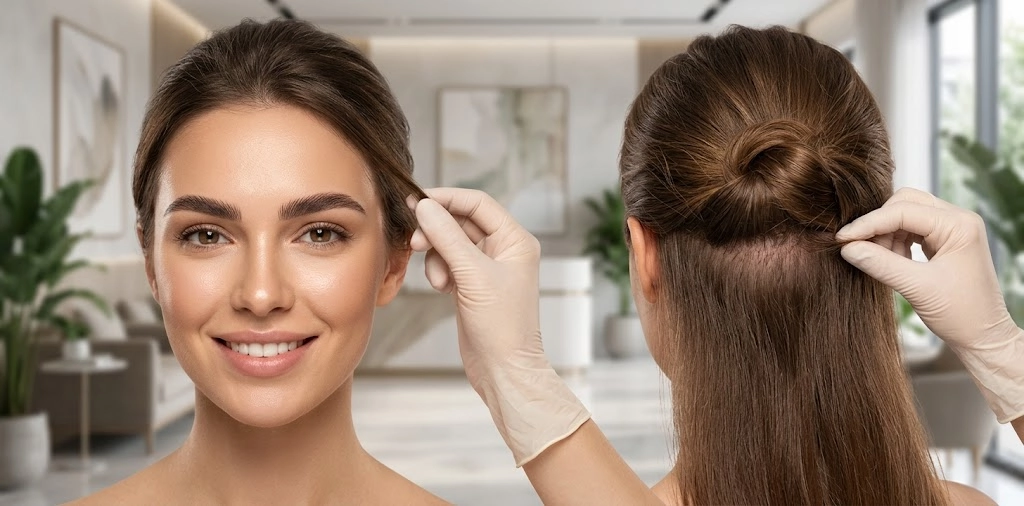
In the Long FUE technique, no shaving is performed in the donor area. Hair strands are left at their original length. The physician selects the fine follicles that are most suitable for the eyebrow structure among the long hair strands by microscopic methods. The harvested points are completely covered by the upper long hair strands.
In this way, you can style your hair as you wish immediately after the operation and leave our clinic and go directly to your business meeting or social program. This comfortable and scarless process, Long FUE eyebrow transplant prices directly reflects the standard of quality of life offered to the patient.
The Importance of Choosing the Right Root from the Donor Site
Not every hair in the nape area is suitable for eyebrows. For a successful transplant graft selection in eyebrow transplantation is a procedure that must be done with extreme precision. Placing thick hairs on the outer contours of the eyebrow causes artificiality.
Therefore, follicles with single hairs (single grafts) and thin follicles should be selected from the donor area. This is a level of expertise that only an experienced physician working under microscopic magnification can perform.
Lasting Effects of the FUT Method on the Nape
In FUT (Follicular Unit Transplantation), an old technique, a strip of skin is surgically cut out from the donor area and the opening is closed with sutures. This procedure results in a horizontal, prominent suture scar in the donor area that remains for life.
This scar is easily noticeable from the outside, especially in people with short hair. For detailed information fut eyebrow transplant nape scar You can review our article. Long FUE does not require stitches or incisions and leaves no permanent scar in the donor area.
Step-by-Step Donor Site Healing Process
After Long FUE eyebrow transplantation, the healing process in the donor area is extremely fast and comfortable. Since there is no surgical incision, tissue healing progresses day by day as follows:
- First 24 Hours (Coagulation Phase): There may be very slight leaks at the micro-intake points. These points close quickly with the coagulation process. The protective bandage applied to the area is removed the next day in our clinic.
- Day 2 to 4 (Re-epithelialization): Since the diameter of the punctures is at the micro level of 0.6 - 0.8 mm, skin cells multiply rapidly and cover these points. Punctate, pinkish micro crusts begin to form.
- Day 5 to 7 (Crusting and Itching): Cell regeneration in the donor area reaches its maximum level. Feeling a slight itching during this process is a natural sign of tissue healing. The crusts begin to fall off as they are washed.
- Day 10 and After (Full Recovery): All the scabs fall off. Pinkness in the donor area turns to skin color. There are no gaps or thinning in the harvested areas, and the nape regains its former natural form.
Golden Rules for Protecting the Donor Site (Nape Care Guide)
To speed up the healing process and maintain the health of the hair follicles in the nape area, it is vital that you follow these rules after the operation:
- First Flush Protocol: The first post-operative donor area wash is performed by our expert team in our clinic after 48 hours. In the following days, special moisturizing lotions and shampoos recommended by our clinic should be used for washing at home.
- Lying Position: When lying on your back for the first 3-5 days, soft travel pillows (neck pillow) should be preferred to reduce pressure on the nape of the neck. This also prevents the planting area from rubbing against the pillow.
- Avoid Scratching and Friction: Itching during healing and scratching the nape of the neck can lead to the risk of micro-infection. You can use moisturizing sprays recommended by your doctor to soothe the itching.
- Sunlight Protection: During the first 1 month, the donor area should not be exposed to direct and intense sunlight (UV rays). Loose, breathable hats can be used when going outside.
- Sport and Physical Activity: During the first 2 weeks, avoid heavy sports and environments with risk of infection such as pools, seas and saunas.
Comparison of Donor Site Effects of Techniques
The comparison of the techniques applied in terms of tissue damage in the donor area, healing speed and social life comfort is presented in the table below:
| Feature | FUT Surgical Method | Classic FUE Method | Long FUE Method |
|---|---|---|---|
| Need for Shaving in the Donor Area | Not required (skin is cut into strips) | Mandatory (The entire nape or a wide line is shaved) | Not required (Hair is completely at its original length) |
| Recovery Time (Days) | 14 - 21 Days (Waiting for the stitches to heal) | 7 - 10 Days (healing of the shaved area) | 3 - 5 Days (Micro holes close quickly) |
| Formed Trace Form | Horizontal, long and permanent white seam line | Micro-level circular marks (may be visible when shaving) | No visible trace remains |
| Perceived Pain / Numbness | High (long-term loss of sensation due to nerve cut) | Mild and transient burning sensation | Minimal (painless process with comfortable local anesthesia) |
| Degree of Tissue Damage | High tissue trauma | Low tissue trauma | Ultra-low, protective microtrauma |
As scientifically demonstrated in the table, the Long FUE technique is the safest and most comfortable option offered by modern medicine in terms of donor site protection and speed of healing. Complications such as loss of sensation, tension or chronic pain in the nape of the neck after the operation are not experienced with this technique.
How is Donor Site Capacity Calculated?
The capacity of the donor area often determines the limit of a successful eyebrow transplant. Hair density, root quality and existing hair density in the nape of the neck indicate how many grafts can be safely harvested.
This calculation takes into account not only current needs but also possible future procedures. The donor area is not an unlimited resource, so it is used sparingly.
Calculating the capacity correctly preserves both the density of your eyebrows and the integrity of your hair. Unhurried and balanced planning is the key to long-term satisfaction.
Risks of Over-Harvesting
Taking too many follicles from the donor area is one of the most common mistakes in terms of eyebrow transplant donor area healing. Excessive harvesting can lead to sparse and unnatural looking areas on the neck.
Therefore, the harvesting is done by distributing it homogeneously over the area. Instead of taking dense roots from a single spot, we make a balanced selection from a large area.
Moderation not only preserves the appearance of your donor area but also secures your future flexibility. Less but right is often better than more but unplanned.
Is the Donor Area Protected If a Second Operation is Required?
Some patients may require additional intensification over time. If the donor area was used sparingly in the first operation, sufficient reserve is preserved for a second procedure.
That's why we always do initial planning with the future in mind. Depleting the donor site to maximize today's result narrows the options in the long run.
Proper management of the donor site makes eyebrow transplantation a sustainable solution, not a one-off. This visionary approach gives our patients peace of mind.
Relationship between Donor Area and Hair Health
The correct management of the donor area concerns not only your eyebrows but also your hair health. With measured and homogeneous harvesting, the hair density in the nape of the neck is visibly preserved.
Excessive or unplanned extraction can lead to thinning in the area. Therefore, we plan the extraction strategy in such a way that it does not disturb the overall appearance of your hair.
A healthy donor site is also a safeguard for future procedures that may be needed. A balanced approach today keeps tomorrow's options open.
Long-Term Recommendations for Donor Site Care
After the operation, the care of the donor area is not limited to a few days. Protecting the area from the sun and friction in the first period ensures smooth healing.
In the long term, taking care of your hair care contributes to keeping the donor area healthy. Healthy hair follicles always keep the area alive.
We also evaluate the condition of the donor area during your follow-ups. Thus, we monitor the health of both your eyebrows and the nape of your neck together.
Precision in Graft Extraction from the Donor Area
The health of the donor site is highly dependent on how the grafts are harvested. Careful harvesting with micro-punch tips ensures that the roots are obtained intact without damaging the surrounding tissue.
Hasty harvesting or improperly depth-adjusted harvesting reduces graft quality and leads to healing problems at the donor site. This is why we carry out the extraction phase with microscopic precision.
In addition to the correct technique, it is also important to keep the length of time the roots are out short. Every detail protects the health of both your eyebrow and donor area together.
The Role of Nutrition in Recovery
Your eating habits also play a role in the rapid and healthy healing of the donor site. A balanced diet with protein, zinc and vitamin C supports tissue repair from the inside.
Drinking plenty of water and avoiding smoking maintains oxygenated blood flow to the area. These simple habits can subtly improve the quality of recovery.
We share personalized nutritional recommendations for the recovery period. Supporting your body from the inside is an important step to complement external care.
Donor Site Tracking and Control Appointments
The healing of the donor area is not a process that ends with the operation; it is a journey followed by follow-up appointments. During the examinations in the first weeks, we evaluate both the transplant area and the donor area separately.
This monitoring allows us to recognize a potential problem early. If there is unexpected tenderness or delayed healing at the donor site, we intervene in time.
It is important that you do not interrupt your controls in order to complete both your eyebrows and your nape area healthy. Following the process together is the safest way.
If you have any questions between appointments, you can contact us. The long-term health of the donor site is assured by regular follow-up.
Eyebrow transplantation is a holistic process that combines donor site healing, measured intake, correct technique, balanced nutrition and regular check-ups. Maintaining the health of the donor area secures not only the present result but also your future options. That's why we plan the plucking strategy with both your eyebrows and your hair integrity in mind. This invisible care is the silent foundation for long-term satisfaction.
The health of the donor area is the invisible but decisive foundation of a successful eyebrow transplant. With proper harvesting, careful monitoring and a healthy healing process, we protect both your eyebrows and your hair integrity together. This balanced approach secures today's result and keeps your future options open.
In short, the correct management of the donor area is as important a part of eyebrow transplantation as the transplantation area. By showing this care from the very beginning, we ensure both a natural result and long-term confidence.
Frequently Asked Questions
The hair strands removed together with the root do not grow back at that point. However, since homogeneous and sparse removal is performed, the surrounding hair completely covers these gaps and no visual deficiency occurs.
No, with the Long FUE method, there is no risk of permanent numbness or loss of sensation as deep incisions are not made to damage the nerve endings. A temporary slight numbness for the first few days is normal.
Performing the operation under sterile clinical conditions, regular use of antibiotic creams prescribed for the first 3 days, and preventing dirty hand contact and scratching reduce the risk of infection to zero.
Although chest or beard hair can theoretically be used, only nape hair is used as a donor in our clinic since the growth character and thickness of these hairs do not adapt to the eyebrow structure.
Itching is usually experienced between the 4th and 8th days after the operation. Aloe vera-containing gels or special moisturizing sprays recommended by your doctor quickly soothe itching.
Usually 200 to 500 grafts are sufficient for eyebrow transplantation. By preserving the healthy structure of the donor area, this amount of follicles can be easily removed without damaging the hair density.
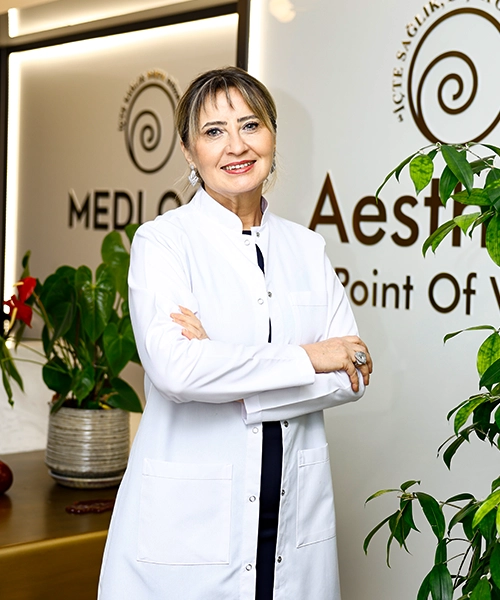
Dr. Handan Yavuz
MAKE AN APPOINTMENT