

Partial Eyebrow Loss and the Need for Localized Restoration
Eyebrow hair loss does not always take the form of general thinning that affects the entire eyebrow. In many people, localized—or partial—eyebrow loss occurs due to causes such as falls during childhood, surgical scars, burns, temporary skin conditions, or repeatedly plucking hairs from the same area with tweezers.
This situation creates noticeable gaps at certain points, even if the overall shape of the eyebrow is even. In such cases, rather than treating the entire eyebrow, the goal is to restore only the sparse area Regional eyebrow transplantation The procedure is performed. This helps preserve the face’s natural balance by avoiding unnecessary interventions.
The no-shave method used at our clinic, led by Dr. Handan Yavuz Long FUE This technique is ideally suited for localized corrections. While traditional methods require shaving the donor area even to graft a small section of the eyebrow, the Long FUE method targets only the specific micro-area needed through shave-free, long-follicle grafting. This ensures that the sparse area is seamlessly integrated with the existing eyebrow hairs—matching their direction, angle, and density—without causing any damage to the natural structure of the rest of the eyebrow. Patients can resume their normal daily activities immediately after the procedure.
Operational planning for regional hair restoration is extremely delicate. This is because the newly transplanted hairs must blend in with the existing hair without creating a visible boundary. During this process, Number of grafts in eyebrow transplantation is generally kept lower, and a meticulous Eyebrow Transplant: Graft Selection The protocol is carried out. In this article, we will examine in detail the stages, advantages, and clinical procedures of regional eyebrow restoration.
Common Causes of Localized Hair Loss
The physiological and environmental causes behind the cessation of hair growth in a specific area of the eyebrow are as follows:
- Cicatricial Alopecia (Scarring Alopecia): Scar tissue (fibrosis) forms on the skin following cuts, surgical incisions, accidents, or burns. Blood circulation in this area weakens, and hair follicles are damaged. New hair does not grow on its own from a scar.
- Intense Tweezer Traction: Over the years, constantly plucking hairs from a specific spot on the eyebrow (usually the arch or tail area) causes the hair follicles in that area to atrophy (traction alopecia).
- Regional Skin Diseases: Dermatological conditions such as alopecia areata or psoriasis can cause hair loss only in specific areas of the scalp. Once the active phase of the condition has ended, a plan for localized restoration can be developed.
- Piercing Injuries: Eyebrow piercings done at a young age can lead to permanent hair loss in that area over time due to tissue damage or infection.
Candidates for Regional Hair Transplantation and the Ideal Patient Profile
Patients who require regional eyebrow restoration are generally those who do not need a full eyebrow transplant, are satisfied with the overall structure of their eyebrows, but are bothered by gaps in specific localized areas. The most suitable candidates for this procedure are:
- People who have permanent scar tissue on their eyebrows as a result of accidents that occurred during childhood or adulthood.
- Individuals who have lost part of their eyebrow due to burns or similar chemical damage.
- People whose eyebrow tails or arches have become permanently sparse due to improper eyebrow plucking (tweezing trauma).
- Patients with scars resulting from the surgical removal of moles (naevi) in the Kaş region.
Before planning the procedure, it is determined whether the factor causing hair loss is active. In particular, for autoimmune conditions such as alopecia areata, the condition must have remained stable for at least 1–2 years without developing new areas of hair loss. In cases of scarring, however, scar It is expected that the tissue will have completed its maturation process and that at least 6 months will have passed since then.
Comparison of Full Eyebrow Transplantation and Partial Eyebrow Transplantation
The differences between the two different restoration strategies, which are applied according to patients' needs, are explained in a comparative manner in the table below:
| Parameter | Full Eyebrow Transplant | Regional (Local) Eyebrow Transplantation |
|---|---|---|
| Purpose of the Application | A complete redesign or thickening of the eyebrow. | Closure of scars, burns, or localized defects. |
| Average Number of Grafts | 400–800 Grafts (Both Eyebrows) | 50–200 Grafts (Total) |
| Integration Challenges | Since a new boundary has been drawn, the focus is on symmetry and overall design. | Very high. The new roots must blend seamlessly with the existing hair. |
| Processing Time | 3.5–5 Hours | 1.5–2.5 Hours |
| The Advantages of Long FUE | Instant visibility of the entire design’s direction and intensity. | Maximum Comfort. The ability to fill in specific spots without any trimming. |
As shown in the table, although regional hair transplantation procedures require fewer grafts, they demand a high level of artistic and technical skill from the surgeon due to the need to blend the grafts with the existing hair. Even a single follicle implanted at the wrong angle will immediately stand out in that area.
The Power of Long FUE Technology in Regional Eyebrow Restoration
The primary goal when filling local gaps is to ensure that the process is not noticeable from the outside in any way. Traditional Classic FUE eyebrow transplant In this method, cutting the grafts short makes it difficult for the surgeon to maintain the natural angles precisely as they insert them among the existing hairs. The requirement to shave also negatively impacts the patient’s social life. Shaving the donor area can be a deterrent, especially for patients seeking a short-term and minor procedure.
The Long FUE technique, on the other hand, offers the following unique advantages for regional hair restoration:
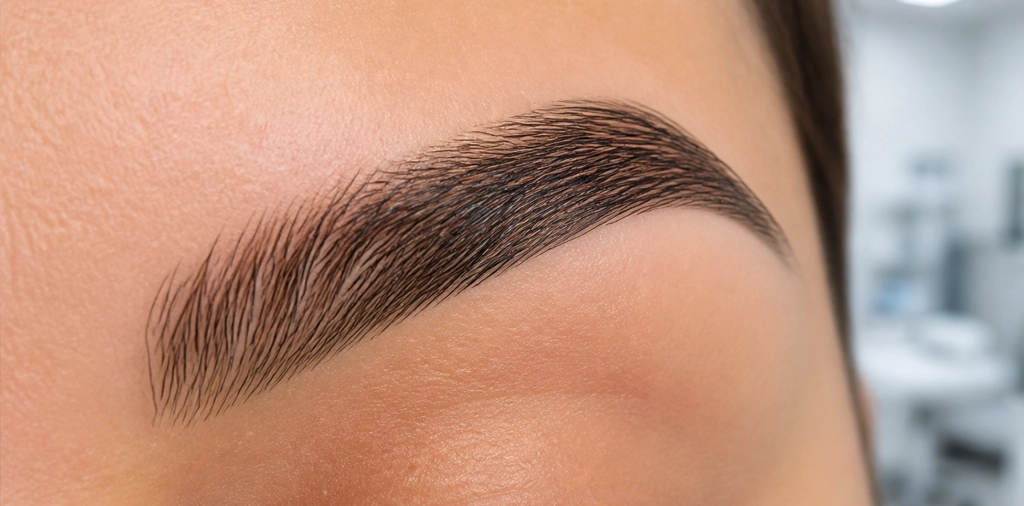
- Simulation of a Natural Angle: The angle at which the natural eyebrow hairs emerge and their angle of inclination within the skin, right next to the bald spot, can be clearly seen with the naked eye. The long grafts are implanted at exactly the same angle as the adjacent hairs (typically at narrow angles of 10–15 degrees).
- Density Balance: Whatever the natural eyebrow density is around the bald area, the same density (number of grafts per cm²) is achieved in the transplanted area. This ensures that no visible boundary line forms in the transition zone.
- Zero Social Disruption: Since the procedure is performed on only a small area and the donor site is not shaved, it is not apparent that the procedure has been performed the moment you leave our clinic after the operation. The scabs are completely hidden beneath the long hair.
Can Eyebrow Transplants Be Performed on Scars and Surgical Scars?
One of the most common questions patients ask is whether hair transplantation can be performed on scar tissue. Blood circulation beneath scar tissue is weaker than in normal skin. However, when microchannels are created using the Long FUE technique, the tissue’s ability to receive nutrients is assessed. Hair transplantation can be performed on scar tissue, and the success rate is quite high.
To promote circulation, grafts in these areas can be placed at slightly looser angles, and if necessary, tissue nutrition can be supported with cellular therapies such as PRP. One of the prerequisites for surgery is that at least 6 months must have passed since the scar formed, to ensure that the tissue has fully stabilized.
Post-Operative Care Guidelines and Procedures Following Regional Hair Transplantation
Because the area treated in regional eyebrow transplants is small, patients may sometimes neglect postoperative care guidelines. However, the physiology of graft take is the same even in small areas and requires strict adherence. The basic guidelines to follow are as follows:
- No Contact for the First 3 Days: The transplanted grafts will attempt to take root during the first 72 hours. During this time, you must not touch the eyebrow area under any circumstances, and you should avoid any friction when putting on or taking off clothing.
- Hygiene and Washing Protocol: The special washing technique demonstrated at our clinic should be followed for the first 10 days. Do not rub the scabs; they should fall off on their own.
- Physical Security: For the first 14 days, you should avoid strenuous exercise and hot environments that cause excessive sweating, such as saunas and Turkish baths. Sweat produced during exercise can increase the risk of infection in the microchannels.
Frequently Asked Questions
Yes. The long hairs transplanted in specific areas also go through a temporary shock loss phase during the first month after the procedure. The lost hairs begin to regrow permanently starting in the third month.
For most cases, a single session is entirely sufficient. In very rare cases where the scar is very deep or blood circulation is extremely poor, a brief follow-up session may be scheduled one year later to increase the intensity.
Yes. Since the transplanted hairs are taken from hair follicles in the donor area, they retain their natural growth pattern and grow quickly. While the growth rate of your natural eyebrows remains the same, you will need to trim the transplanted area periodically with eyebrow scissors.
Since fewer grafts are used, the cost of the procedure is generally more affordable than that of a full hair transplant. However, because the procedure requires a high degree of microsurgical precision and significant effort on the part of the surgeon, pricing is determined not only by the number of grafts but also by the degree of difficulty of the procedure.
Doğru teknik ve uzman bir hekim tarafından yapıldığında dikiş izi üzerine ekilen köklerin tutma oranı %90’ın üzerindedir. Kliniğimizde işlem öncesinde yara dokusu detaylıca incelenerek en uygun planlama yapılır.
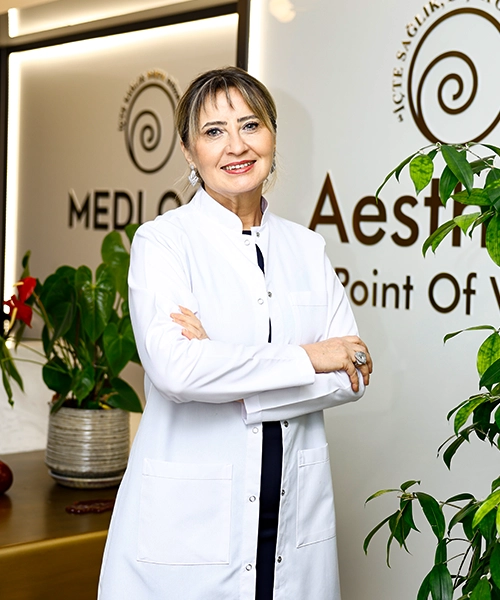
Dr. Handan Yavuz
MAKE AN APPOINTMENT