

Sun Protection After Eyebrow Transplantation — The Effect of UV Rays on Transplanted Follicles and the Importance of Protection
One of the most important precautions patients must take after eyebrow restoration is to protect the newly transplanted hair follicles and the healing skin tissue from sunlight. Ultraviolet (UV) radiation from the sun can cause permanent damage not only to normal skin but also to tissues that have undergone microsurgical procedures and are in the healing process. Therefore, following a successful procedure, Sun Protection After Eyebrow Transplantation Strictly following the instructions is the most critical factor in ensuring that the grafts take root properly and that no scars remain on the skin.
According to Dr. Handan Yavuz’s clinical protocols, newly transplanted hair follicles (grafts) and the surrounding epidermal tissue are extremely vulnerable to external factors during the first few weeks. Direct exposure to sunlight can disrupt melanin synthesis in skin cells during the healing phase, leading to permanent dark spots (hyperpigmentation). Additionally, UV raysThe thermal energy they carry can damage the new capillary networks forming around the hair follicles, thereby preventing the grafts from receiving proper nourishment. This is a serious risk factor that directly reduces the success of the final outcome and can lead to hair loss.
If our patients Can eyebrow transplants be done in the summer? If they are looking for an answer to this question, they should know that this procedure is extremely safe even during the summer months, but that sun protection measures must be followed much more strictly after the procedure. Advanced shave-free Long FUE Because the donor area is camouflaged by the hair above it, patients need only follow a sun protection plan focused on the eyebrow area. This makes sun protection much easier compared to traditional methods.
Physiological Damage Caused by Sunlight to the Skin and Hair Follicles
After the procedure, the skin tissue in the treated area is in a state of “inflammation”—that is, a natural healing phase. If skin cells are exposed to sunlight while they are regenerating during this phase, the following physiological issues may develop:
- Hyperpigmentation (Dark Spots): When the fresh skin tissue in the healed microchannels comes into contact with UV rays, melanocytes produce excessive melanin as a defense mechanism. This causes grayish-brown spots to form in the area where the eyebrow transplant was performed. These spots are aesthetically displeasing and take a long time to treat.
- Graft Dehydration (Root Desiccation): Direct sunlight and UV rays disrupt the moisture balance of fresh tissue, causing transplanted roots to dry out (dehydration) and lose their vitality. A hair follicle that is deprived of moisture cannot take root.
- Capillary Damage: The delicate capillaries (vascular structures) that are developing to nourish newly planted roots can be damaged by intense UV radiation. This disrupts the roots’ nutrient uptake process.
Similarly, after the procedure, it’s not just the sun’s rays, but also sweating while sunbathing and then The Sea and the Pool After Eyebrow Transplantation Exposure to such environments can also disrupt the skin’s natural pH balance, increasing the risk of infection. For this reason, protective protocols must be considered as a whole. Sunlight’s localized immunosuppressive effect can also slow down the healing process.
Stages of Sun Protection After Eyebrow Transplantation
The sun protection process varies depending on the days following the procedure. The steps we follow to better manage this process are summarized in the table below:
| Time Zone | Critical Risks | Basic Protection Method | Permitted Activities |
|---|---|---|---|
| The First 14 Days (Sensitive Phase) | Discoloration, graft loss, infection, excessive swelling. | Physical protection with a wide-brimmed hat. Do not use chemical sunscreen. | Air-conditioned indoor spaces, evening walks, brief stops in the shade. |
| Days 15–30 (Transition Phase) | A slight risk of pigmentation, sensitivity during the shock loss phase. | High-SPF (SPF 50+) mineral-based sunscreens and a hat. | Water activities (with sunscreen), light outdoor walks. |
| Months 1–3 (Growth Phase) | Persistent skin sensitivity, uneven skin tone. | Apply SPF 50+ sunscreen 20 minutes before going outside. | Regular outdoor activities, vacation programs (with a guide). |
Physical Protection Methods: Choosing a Hat and Rules for Use
For the first 14 days after the procedure, it is strictly prohibited to apply sunscreen or any cosmetic products directly to the transplant area. This is because these chemicals can seep into the fresh incisions, damaging the grafts or clogging the pores. During this period, the only and safest method of protection is **physical protection**.
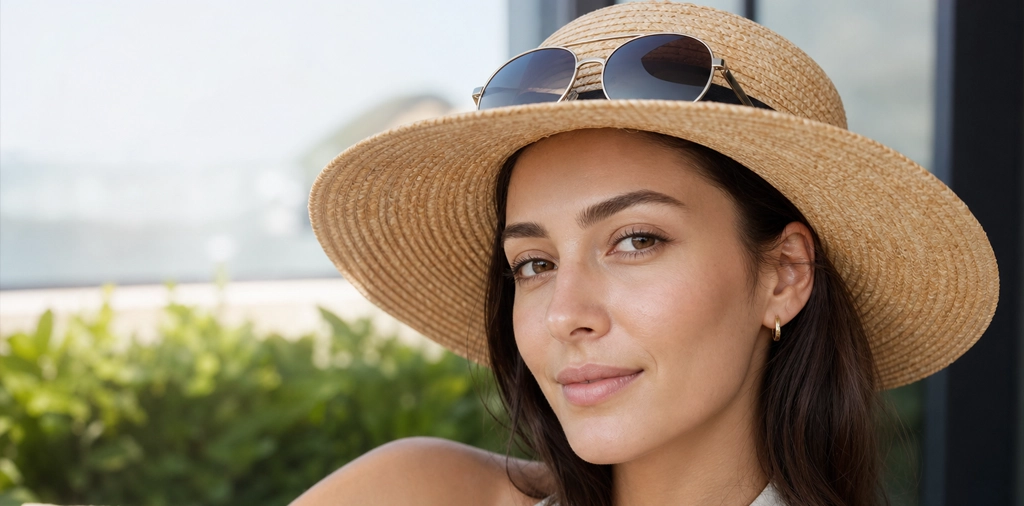
Wearing a hat is the primary means of physical protection. However, not every hat is suitable for use after an eyebrow transplant. When choosing a hat, you should pay attention to the following details:
- Visor Width: The brim of the hat should be wide enough to completely block sunlight from hitting the eyebrow area at either a vertical or horizontal angle (fisherman’s hats or sports hats with wide brims are recommended).
- Rigidity and Pressure: The inner part of the hat that comes into contact with the forehead and eyebrow area should be soft and not too tight. Hard hats that press against the forehead can increase swelling in the eyebrow area and cause the grafts to shift out of place.
- Air Permeability: The fabric of the hat should be made of natural, breathable cotton that doesn't cause sweating. Synthetic fabrics can cause the head to sweat, which may lead to infection.
You should also be very careful when putting on and taking off the hat. Quick and careless movements can cause the hat’s inner lining to rub against the eyebrow hairs and dislodge the grafts. The hat should be placed slowly from back to front and lifted at a straight upward angle when removing it.
Chemical Protection Methods: Sunscreen Usage Protocol
By the 14th day after the procedure, the micro-scabs on your skin will have completely fallen off, and the integrity of the epidermis will have been largely restored. From this point on, you can start using sunscreen:
- Choosing a Mineral Filter: Sunscreens used after eyebrow transplantation should contain **mineral (physical) filters**—such as zinc oxide or titanium dioxide—rather than chemical filters. Mineral filters are not absorbed by the skin; instead, they form a barrier on the skin’s surface that reflects UV rays like a mirror. This reduces the risk of allergies or irritation on sensitive skin to zero.
- Sun Protection Factor (SPF): The product you choose should have a sun protection factor (SPF) of at least 50 or higher. It should provide broad-spectrum protection against both UVA and UVB rays.
- Frequency of Use: Sunscreen should be applied at least 20–30 minutes before going outside. If you plan to stay outdoors, reapply it every 2–3 hours. Reapply the sunscreen after swimming or sweating.
- Cleaning: At the end of the day, any remaining sunscreen should be gently rinsed off with warm water using the gentle cleansing gels recommended by our clinic, without applying pressure to the eyebrow area.
When applying sunscreen, you should avoid using circular rubbing motions with your fingertips. The safest method is to apply the sunscreen in small dots to the eyebrow area and then spread it with light, dabbing motions.
The Advantages of the Long FUE Method in Sun Protection
The shave-free Long FUE technique, which we successfully perform at our clinic, makes the process of sun protection significantly more comfortable for our patients. With traditional methods, the back of the head is shaved, so patients have to protect both their eyebrows and the shaved area at the back of their heads from sunburn. When shaved scalp skin is exposed to the sun, it quickly reddens, dries out, and tightens, causing pain. This requires patients to wear additional accessories to cover the back of their neck when wearing a hat outdoors.
With the Long FUE method, since the hair in the donor area is left long, the top strands of hair cover the scalp at the back of the head like a natural umbrella. This means you don’t need to take any extra sun protection measures for the donor area. You only need to protect your eyebrow area. This doubles your post-operative comfort and doesn’t restrict you during your vacation.
For detailed information and cost analyses regarding the Long FUE method, Long FUE eyebrow transplant prices You can browse our website. Dr. Handan Yavuz aims to help patients get through this process without disrupting their social and professional lives, using modern medical technologies.
Frequently Asked Questions
For the first 14 days after the procedure, you should wear a wide-brimmed hat whenever you go outside to protect yourself from the sun. After the 14th day, when you start using sunscreen, the need to wear a hat decreases, but it is still beneficial to wear one when exposed to intense sunlight.
Rather than a specific brand, you should choose SPF 50+ sunscreens sold at pharmacies that are dermatologically tested, fragrance-free, alcohol-free, and—most importantly—contain mineral filters (which create a physical barrier). Our clinic will provide you with product recommendations tailored to your needs during your follow-up appointment.
Sunlight does not directly change the direction of the hair. However, if you remain unprotected in the sun and develop a severe sunburn, the resulting tissue damage in that area may disrupt the angle at which the grafts take root or lead to hair follicle loss, resulting in an uneven appearance.
Yes. Tanning beds emit very intense artificial UV rays. These rays can cause severe burns, discoloration, and graft loss in the newly transplanted area. Using a tanning bed is strictly prohibited for the first 3 months following the procedure.
Yes. UV rays can reach your skin by reflecting off sand, concrete, or water, even if you’re in the shade. That’s why you should continue to wear a hat for the first 14 days, even when sitting in the shade, and be sure to use sunscreen afterward.
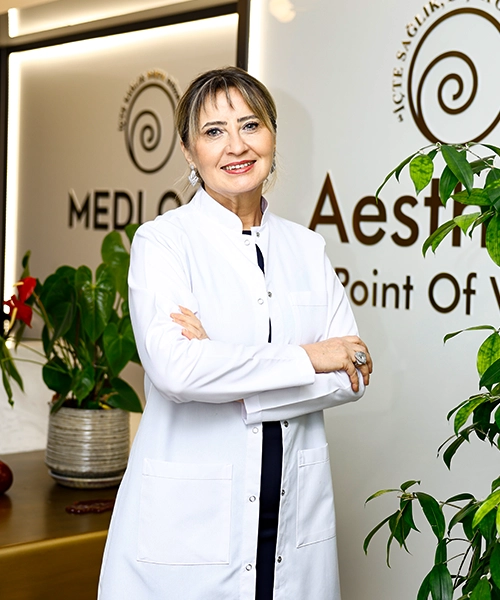
Dr. Handan Yavuz
MAKE AN APPOINTMENT