

The Definitive Solution for Thicker Eyebrows — Eyebrow Thinning and Searching for Solutions
Well-shaped, full, and thick eyebrows are among the most fundamental aesthetic elements that complement facial symmetry and add depth to one’s gaze. However, eyebrow thinning and loss can occur due to genetic factors, aging, hormonal imbalances, improper eyebrow grooming habits, and certain skin conditions. This situation leads individuals to seek out various cosmetic and medical methods to thicken their eyebrows.
There are numerous options on the market, ranging from eyebrow serums that promise miraculous results to plant-based oils, and from permanent makeup applications to surgical procedures. So, among these methods, The Definitive Solution for Thicker Eyebrows Which is the real option here? Temporary cosmetic procedures, or eyebrow transplantation performed using modern medical technology? The answer to these questions isn’t just a matter of aesthetic preference—it also has to do with the wise management of your money and time.
In the procedures performed at our clinic under the leadership of Dr. Handan Yavuz, we aim to meet our patients’ aesthetic expectations in the most natural and long-lasting way possible. When examined in light of scientific facts, it is clear that there is no cosmetic product capable of restoring dead hair follicles.
In this detailed guide, we will thoroughly examine the biological mechanisms behind eyebrow thickening methods, the pros and cons of popular treatments, the fundamental biological causes of eyebrow thinning, and why permanent eyebrow transplantation is the only true and definitive solution. By learning the medical science behind your thinning and falling out eyebrows, you too can take the right steps toward a permanent solution. Our goal is to help you embark on an informed aesthetic journey based on clinical data rather than hearsay.
Eyebrow Biology and the Scientific Facts Behind Thinning
The growth and survival of a hair depend on the living tissue beneath the skin hair follicleIt depends on the root. Each hair follicle is nourished by blood vessels and produces hair within a specific cycle. It is biologically impossible for hair follicles that have been damaged or have completely lost their function for various reasons to produce hair again. The main causes of eyebrow hair loss are as follows:
- Constant Misalignment (Root Trauma): Over the years, repeatedly plucking or threading hair from the same area causes microscopic scar tissue (fibrosis) to form in the hair follicle. This condition blocks the follicle’s blood supply, and over time, the root dies completely. This process is also known as “root atrophy.” Continuous mechanical stress on hair follicles causes them to permanently lose their ability to regenerate.
- Endocrine and Hormonal Disorders: Hormonal imbalances in the body directly affect hair health. In particular, thyroid insufficiency (hypothyroidism) is one of the most common causes of eyebrow hair loss. In patients with hypothyroidism, the outer third of the eyebrows falls out; in medical literature, this is known as “Queen Anne’s Sign.”.
- Dermatological Skin Diseases: Conditions affecting the eyebrow area—such as eczema (atopic or seborrheic dermatitis), psoriasis, and lichen planopilaris, which targets hair follicles—can lead to permanent eyebrow loss. The chronic inflammation associated with these conditions causes scar tissue to form around the follicles, making hair growth impossible.
- Nutritional Deficiencies: In addition to protein-energy malnutrition, deficiencies in biotin, zinc, iron, vitamin B12, and selenium also trigger hair loss by causing hair follicles to enter the telogen phase prematurely.
- Traumas and Scars: Skin damage—such as bruises, cuts, burns, or surgical stitches—destroy the hair follicles in that area. Hair does not naturally grow from scar tissue. For these types of situations, Eyebrow Transplant for Injured Eyebrows The protocols must be followed.
- Immune System Problems (Alopecia): Eyebrow loss occurs in autoimmune conditions where the body mistakenly identifies its own hair follicles as foreign substances and attacks them. For more information, Eyebrow hair loss following alopecia You can review our article.
An Analysis of Popular Eyebrow Thickening Methods
Let’s take a scientific look at the mechanisms of action behind the methods commonly used to thicken eyebrows:
1. Vegetable Oils (Castor Oil, Almond Oil, Garlic)
These methods, which are widely used by the general public, prevent breakage by moisturizing existing eyebrow hairs and make them look shinier. Castor oil nourishes the hair shaft thanks to its ricinoleic acid content, while garlic can temporarily increase local blood flow.
However, the ability of these oils to revitalize hair follicles beneath the skin or promote new hair growth has not been scientifically proven. Since they cannot affect dead hair follicles, they do not offer a definitive solution. Furthermore, they carry a high risk of clogging pores, which can lead to acne at the hairline or folliculitis (inflammation of the hair follicles).
2. Eyebrow Growth Serums (Peptides and Prostaglandin Derivatives)
Serums containing certain active chemical ingredients can temporarily extend the anagen (growth) phase of hair, helping existing eyebrows stay in place longer without falling out. Prostaglandin analogs in particular (such as bimatoprost) produce this effect by stimulating prostaglandin receptors in the hair follicles. This creates a temporary sensation of thicker eyebrows.
However, as soon as the serum is discontinued, the prolonged growth phase ends, and all the extra-protected hairs fall out rapidly, causing the eyebrows to return to their previous sparse state. In addition, side effects may include hyperpigmentation (darkening of the skin) around the eyes, permanent darkening of the iris, eye irritation, and itching at the base of the eyelashes.
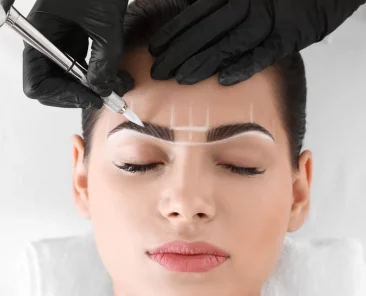
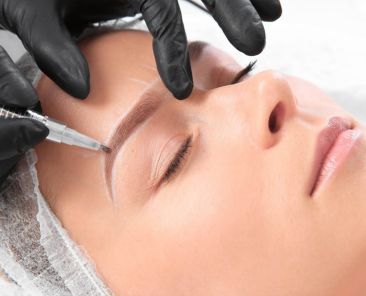
3. Microblading and Permanent Makeup
These methods are forms of tattooing (pigmentation). The illusion of fullness is created by drawing fine lines on the skin’s surface. However, they do not create a three-dimensional hair-like texture. Over time, the pigments used undergo chemical changes and turn into an artificial gray or reddish color.
Frequent treatments on the epidermis and dermis layers of the skin, however, can cause scarring in the tissue, which may also damage the remaining natural hair follicles and lead to their complete loss.
4. Trichotillomania and Eyebrow-Plucking Disorder
Some individuals develop a habit of constantly pulling out or plucking their eyebrow hairs (trichotillomania) due to stress, anxiety, or psychological triggers. Over time, the constant pulling of these hairs causes traction alopecia, leading to permanent hair loss. Eyebrow transplantation can yield extremely successful results in cases of trichotillomania; however, for the procedure to be performed, the patient must have completely stopped this behavior and successfully completed psychological treatment. For patients who have not exhibited eyebrow-plucking behavior for at least 1–2 years, permanent eyebrow transplantation using the Long FUE method can be planned to restore the former full appearance.
5. Long FUE Eyebrow Transplant (Permanent Solution)
It involves transferring viable hair follicles from the back of the head—where hair does not fall out—to the eyebrow area. Because new, viable, and well-nourished follicles are created beneath the skin, this method provides natural, lifelong hair regrowth that is completely free from temporary effects. Since the Long FUE method is performed without shaving, it allows you to complete the process without any visible scarring.
Design and Golden Ratio Calculations in Permanent Eyebrow Thickening
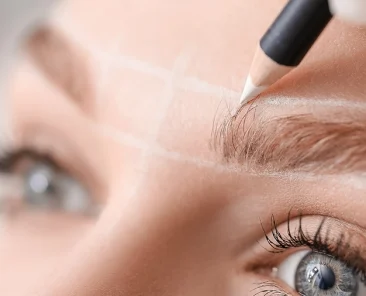
One of the most critical steps in an eyebrow transplant procedure is the design phase, during which the eyebrow shape best suited to the individual’s facial structure is determined. At our clinic, rather than drawing random lines during this design process, we utilize calculations based on the **Golden Ratio (1.618 – Phi Ratio)**, which incorporates mathematical and geometric principles. Special golden ratio compasses are used to identify the symmetrical points on your face. The design is based on these three main reference points:
- Starting Point (Point A): It is the point where a vertical line drawn from the outermost point of the nostril to the inner corner of the eye intersects with the eyebrow line. If the eyebrow begins further back from this line, it makes the face appear wider; if it begins closer to it, it creates an aggressive expression.
- Curve / Apex (Point B): It is the area where a diagonal line drawn from the side of the nose to the outer edge of the pupil, while the patient is looking straight ahead, meets the eyebrow. This should be the highest point of the eyebrow, and this peak can be adjusted to be sharp or soft depending on the character of the face.
- Tail / End Point (Point C): It is the point where a diagonal line drawn from the side of the nose to the outer corner of the eye (lateral canthal angle) intersects the eyebrow line. If the eyebrow ends before this point, it makes the eyes look tired; if it extends beyond it, it pulls the facial expression downward.
Eyebrows designed according to these golden ratio principles blend seamlessly with the face’s overall bone structure and eye shape, creating a completely natural frame. When designing eyebrows, the patient’s facial expressions are also dynamically analyzed. By observing how the eyebrows move when speaking or smiling, the static design is integrated with these dynamic facial expression lines. As a result, your eyebrows remain in perfect harmony with your face not only when you are at rest, but also when you are speaking and expressing your emotions.
Microscopic Details of Eyebrow Transplantation Surgery and the Use of Sapphire Blades
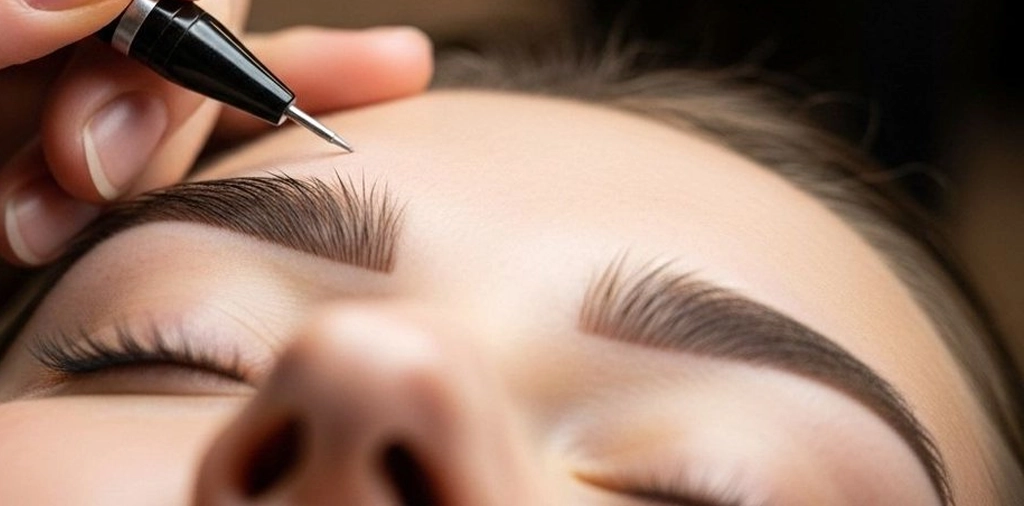
The eyebrow transplant procedure is a process that requires a high degree of microsurgical precision. At our clinic, we use special **Sapphire Blades** made from genuine sapphire instead of traditional steel blades to create the channels. The use of sapphire blades offers numerous advantages for the long-term success of eyebrow transplantation:
Thanks to their smooth surfaces and microscopic size, sapphire tips allow for the creation of millimeter-sized channels without damaging the skin tissue. Since they cause less tissue trauma than steel blades, the risk of post-procedure swelling, bruising, and edema is minimal. Since the diameter of the channels created by sapphire tips exactly matches the thickness of the graft, the angles of the implanted grafts (10–15 degrees) do not shift during the healing process and remain stable. This maximizes control over hair direction.
In addition, grafts harvested from the donor area are examined under high-magnification microscopes prior to implantation to completely remove any double or triple hair follicles. Since the natural anatomy of the eyebrow does not contain multiple hair follicles, this meticulous separation process under the microscope is the most important guarantee of a natural-looking result. Single hair follicles are placed into narrow channels created with sapphire tips to achieve the highest density and most natural-looking results. The depth of the follicles in the skin is also adjusted with millimeter precision to prevent cyst formation.
Adjuvant Treatments and the PRP Protocol for Eyebrow Thickening
In the permanent eyebrow thickening process, we frequently use PRP (Platelet-Rich Plasma) therapy to support hair follicles before or after the procedure. Platelet-rich plasma, obtained by subjecting the patient’s own blood to a special centrifugation process, contains a high concentration of growth factors. These factors stimulate blood circulation and cellular regeneration in the eyebrow area, enabling the newly implanted follicles to take root quickly beneath the skin.
PRP treatment also stimulates existing weakened eyebrow follicles, helping them to thicken and become fuller. A 3- to 4-session PRP protocol combined with a transplant procedure significantly increases the success rate and overall density of permanent eyebrow transplants. The frequency of PRP treatment is typically planned as 3 to 4 sessions, depending on the patient’s skin type. The first two sessions are performed during the procedure and in the first month immediately following it, while the remaining sessions are administered at the 3- and 6-month marks, depending on the pace of healing, to maximize support for hair follicle thickening.
Budget Analysis and Long-Term Benefits of Long FUE Eyebrow Transplantation
One of the most important factors patients consider when evaluating eyebrow enhancement methods is their budget. Microblading, permanent makeup, or growth serums may seem like more economical options at first glance. However, when the long-term costs of these methods are analyzed, the picture changes.
Microblading treatments must be repeated every 1 to 1.5 years on average, and each session requires a significant financial investment. High-quality growth serums, on the other hand, incur a regular monthly cost. In addition, the time spent applying eyebrow makeup with an eyebrow pencil every day is also a significant loss.
Permanent eyebrow transplantation, on the other hand, is a one-time investment. Since it offers lifelong results, it does not incur any additional session costs or product purchase expenses in subsequent years. When simulating a 5- to 10-year timeframe, it has been scientifically proven that eyebrow transplantation is a much more economical and budget-friendly solution compared to temporary methods. In addition to providing the most natural and realistic-looking results, it is also the most financially sensible investment for eyebrow enhancement.
Comparison Table of Eyebrow Thickening Methods
The table below compares the longevity, natural appearance, and cost of commonly used methods for eyebrow enhancement:
| Method | Mechanism of Action | Duration of Persistence | Level of Naturalness | Risks and Side Effects | Long-Term Cost |
|---|---|---|---|---|---|
| Vegetable Oils | Moisturizes the hair | None (the effect is temporary) | Low-Medium (does not produce new hair) | Risk of acne on the skin | Low |
| Eyebrow Serums | Extends the growth phase | Valid as long as the serum is used | Medium (spills when set down) | Allergies, eye irritation, discoloration | High due to continuous buying |
| Microblading | Dye is injected into the leather | 1–2 Years (color fades) | Low (looks artificial up close) | Tissue damage, discoloration, infection | High due to annual maintenance |
| Long FUE Eyebrow Transplant | Live hair follicle transplantation | Lifetime Guarantee | En Yüksek (%100 doğal kendi kılınız) | None (safe under local anesthesia) | One-time investment (economic) |
As can be clearly seen from the table, none of the temporary methods can provide permanent, natural-looking hair growth. The only method that saves time and money and provides real, physical hair Long FUE It is an eyebrow transplant. To get information about the cost of the procedure, Long FUE eyebrow transplant prices You can check our page.
Why Is Long FUE Eyebrow Transplantation the Definitive Solution?
The Long FUE technique has set a new standard in eyebrow restoration by eliminating the drawbacks of older methods:
- Shave-Free Application: Since the donor area or eyebrow region is not shaved, there will be no drastic change in your appearance after the procedure, and you can resume your social life immediately. Female patients, in particular, frequently choose this technique because they do not have to cut their hair short.
- Instant Results: Since the hair is planted in its full length, you can see the new, full shape of your eyebrows in the mirror as soon as the procedure is finished.
- Custom Design: The eyebrow design that best suits your facial features is created using a golden ratio ruler. Since the hairs are placed at angles of 10–15 degrees parallel to the skin, this prevents an unnatural appearance.
- Healthy and Strong Roots: Because the hair follicles used come from the back of the head—where hair doesn’t fall out—the transplanted eyebrows will last a lifetime.
If you’d like to explore the differences between traditional hair transplant techniques and Long FUE in more detail, Classic FUE eyebrow transplant You can also check out our website. All procedures performed at our clinic are meticulously planned after analyzing the patient’s overall health and facial anatomy. Regardless of the cause of your sparse eyebrows, a properly planned eyebrow transplant will permanently give you the full, natural-looking eyebrows you’ve always dreamed of.
**”At Istanbul Eyebrow Transplant, every procedure is customized following a detailed facial analysis. Please contact us for more information about a permanent solution for thicker eyebrows.”**
Frequently Asked Questions
No, eyebrow serums only provide temporary fullness while they are being used. Once you stop using the serum, your eyebrows will return to their previous sparse state. The only permanent and definitive solution is eyebrow transplantation.
Since the donor follicles are taken from the person’s own hair, color and texture matching is optimal. Over time, the hair follicles adapt to the eyebrow area and blend seamlessly with your natural eyebrows.
Yes, even for people who have completely lost their eyebrows due to genetic factors or illness, a transplant can be performed by designing the eyebrows from scratch, provided there are sufficient hair follicles in the donor area.
With Long FUE, density is visible immediately after the procedure. However, after the shock loss phase, it takes an average of 8 to 12 months for the eyebrows to grow out permanently and reach their final density.
When performed in a sterile clinical environment and under the supervision of a specialist physician, eyebrow transplantation has no permanent side effects. The mild redness and scabbing observed in the first few days after the procedure are temporary.
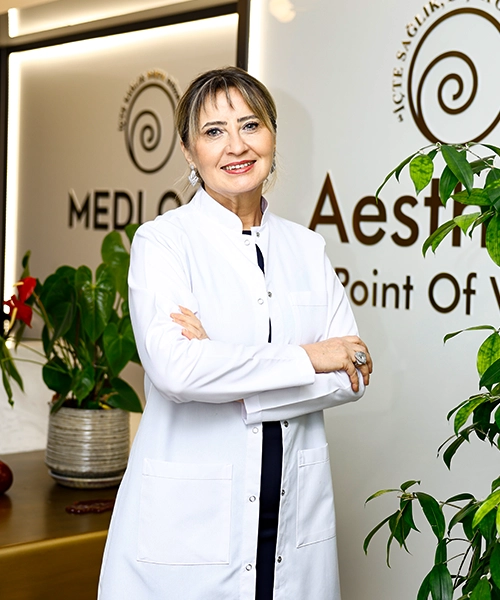
Dr. Handan Yavuz
MAKE AN APPOINTMENT