

Natural-Looking Eyebrow Transplantation — Clinical and Aesthetic Parameters of a Natural Appearance
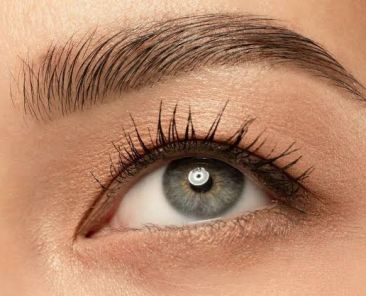
The biggest concern for individuals experiencing eyebrow loss or thinning when considering a permanent treatment is the fear of ending up with an unnatural, stiff, or exaggerated-looking eyebrow appearance after the procedure. Some negative user reviews circulating on internet forums can reinforce the perception that “eyebrow transplants don’t look natural.” However, with modern medical technologies and a specialized surgical approach, Natural-Looking Eyebrow Transplant It is entirely possible to have it done. The secret to achieving a natural-looking result lies in the millimeter-precise calculation of hair direction, the angle of implantation, and the correct selection of grafts.
At our clinic, led by Dr. Handan Yavuz, we view eyebrow restoration not merely as a technical procedure to fill in gaps, but as a way to enhance the patient’s facial structure and the golden ratio We manage it as an artistic process of reconstruction. Advanced, no-shave Long FUE This technique is our greatest ally in achieving a natural look. Transplanting the grafts taken from the donor area to the eyebrow region in their full length, without trimming them, allows the physician to perform the transplant while observing the hair’s natural curl. This eliminates errors caused by “estimated direction” in classical methods.
To learn more about popular myths circulating in society Myths About Eyebrow Transplants You can read our article. As for our patients who experience stress before surgery, they can learn about the reality of recovery by Fears About Eyebrow Transplants They can take a look at our content. In this article, we will examine in detail the physiological criteria that ensure eyebrow transplants look natural.
4 Critical Factors That Determine the Natural Look of Eyebrow Transplantation
The basic biological and technical principles that ensure an eyebrow transplant looks natural when viewed from the outside are as follows:
- 1. Narrow Planting Angles (Angle Control): While scalp hairs grow at angles of 40–45 degrees from the scalp, eyebrow hairs grow at very narrow angles of 10–15 degrees, almost parallel to the facial bone and skin. The surgeon must perfectly replicate this narrow angle when creating the channels. The moment the angle becomes steeper, the natural appearance is lost.
- 2. Three-Dimensional Direction Tracking (Direction Map): Eyebrow hairs do not all grow in the same direction. The front part of the eyebrow (near the nose) grows upward, the middle section grows horizontally toward the temples, and the tail section grows slightly downward. During the transplant procedure, this natural growth pattern must be replicated exactly.
- 3. Use of Single Grafts: Eyebrow follicles naturally produce single hairs. If the groups of two or three hairs found within the grafts harvested from the back of the head are implanted without being separated individually under a microscope, an unnatural and uneven appearance results.
- 4. Gauge (Wire Thickness) Compatibility: The fine, downy hairs behind the ears are the most suitable for the eyebrow area. Selecting these fine hairs ensures that the transplanted areas have a soft, natural transition.
Comparison Table of Naturalness Parameters for Techniques
The table below provides a comparative overview of how different techniques used in eyebrow restoration affect natural-looking results:
| The Naturalness Criterion | FUT Method | Classic FUE Technique | Long FUE Technology |
|---|---|---|---|
| Angle Accuracy | Very Low. The trends in strip trading are mixed. | Medium. It is difficult to estimate the angle with short bristles. | Kusursuz (%100). The long hairs provide an instant reference for direction. |
| Single-Graft Isolation | It's difficult; the follicles could be damaged. | It is possible, but the accuracy of the separation may decrease at the length of a close shave. | Very high. Individual hair follicles are clearly distinguishable under a microscope. |
| Channel Width | Wide incisions are made, and there is a risk of scarring. | Microcannels are opened. | Ultra-Micro Channels. Channels that leave no trace are created specifically at the hair follicle. |
| Curve Design | It tends to have fixed and artificial boundaries. | Standard design protocols are followed. | Golden Ratio Design. A dynamic design drawn freehand based on facial anatomy. |
How Is the Golden Ratio Applied in Natural Eyebrow Design?
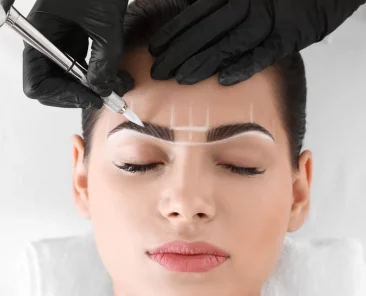
The natural placement of eyebrows should be in proportion to a person’s facial anatomy. The **Golden Ratio** design we use at our clinic is based on the combination of these three key points:
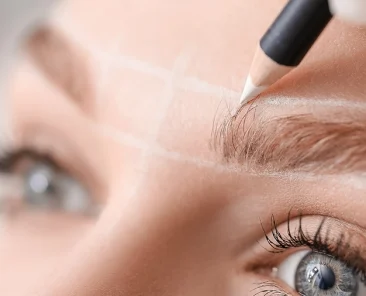
1. Starting Point (Head): It is the point where a vertical line drawn upward from the outermost edge of the nostril intersects with the eyebrow. If the start of the eyebrow is too far inward or too far outward, it creates an unnatural appearance.
2. Arch: It is the highest point where a diagonal line drawn from the outer edge of the nostril to the outer edge of the pupil intersects the eyebrow. This point is the highest part of the eyebrow and determines the character of the facial expression.
3. End Point (Tail): It is the point where a diagonal line drawn from the side of the nose to the outer corner of the eye (lateral canthus) ends. If the tail of the eyebrow is too long or too short, it can make the eyes appear droopy or too slanted.
During the design phase, these points are marked with a pen and presented to the patient for approval. Thanks to the Shave-Free Long FUE procedure, the design boundaries are integrated with the existing hair, bringing the design to life instantly. For detailed information on the process, Classic FUE eyebrow transplant You can also access it from our website.
Common Mistakes That Compromise Natural Results and Our Clinic’s Approach
A natural result is often not hidden in a single technical detail, but in the sum of many small decisions. An excessively thick design that doesn’t conform to facial proportions, an incorrectly chosen root diameter, or minor deviations in the direction of implantation may seem harmless on their own. However, when these factors combine, the eyebrow takes on an unnatural appearance.
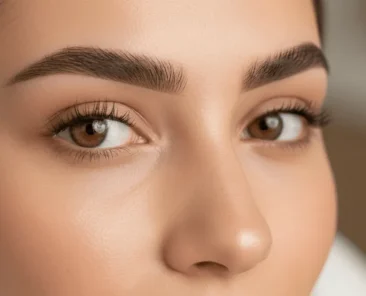
The most common concern our patients express is that the transplanted eyebrows will make their facial expression look harsh. To minimize this risk, we plan for a sparser density at the front of the eyebrow, with a gradually increasing density toward the middle and tail. This way, the transplanted eyebrows look natural—not like a line drawn with makeup, but like your own eyebrows that have been there for years.
Another factor that determines the natural look is color. Hair taken from the donor area gradually adapts to the color and texture of the eyebrow tissue over time. Dr. Handan Yavuz establishes this harmony from the very beginning by individually adjusting the hair thickness and growth angle during the transplant procedure to match the symmetry of your face.
Maturation of the Natural Result Within the First Year
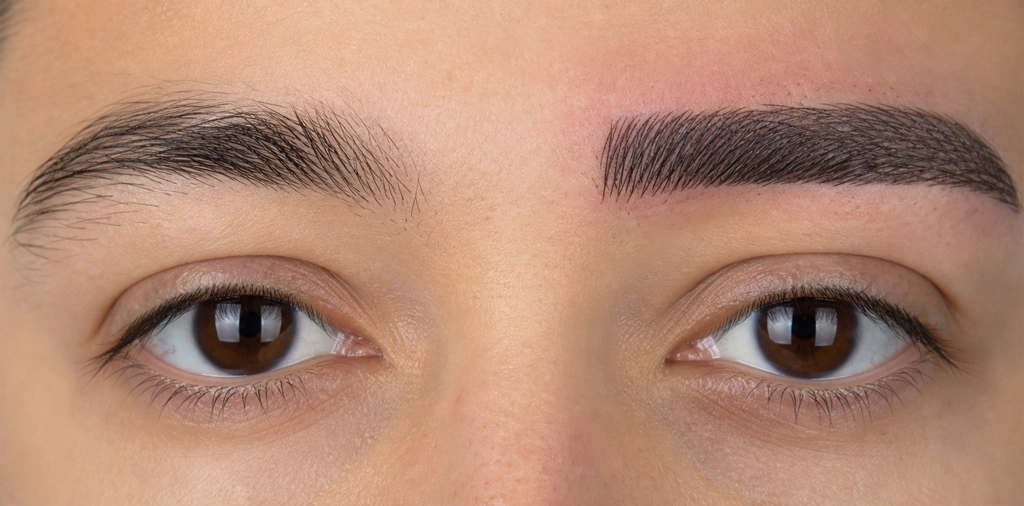
The image you see immediately after the procedure is only the initial stage of the final result. In the first few months, the hairs enter their natural growth cycle and then settle permanently. During this process, your eyebrows first become more defined and then mature as they settle into your facial features.
Our patients who patiently go through this maturation period achieve the most natural-looking results by the end of the first year. Taking your time with eyebrow design is just as important as the technique itself when it comes to achieving a natural look.
How to Choose the Right Clinic for Natural-Looking Eyebrows?
The most decisive factor in achieving a natural-looking result is the aesthetic vision and experience of the team performing the procedure. The same technique can yield completely different results depending on who performs it. That’s why, when choosing a clinic, we recommend that you consider not only the price but also the doctor’s previous work.
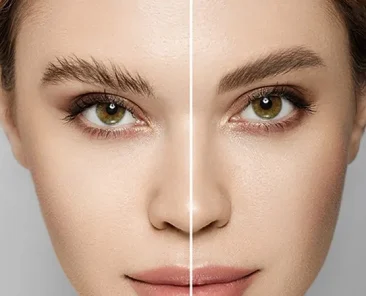
As you examine the before-and-after photos, pay attention to how naturally the eyebrows blend with the facial expression. A well-designed eyebrow won’t look “planted” in the photo.
During the initial consultation, it’s also important that the doctor sets aside enough time for you, listens to your expectations, and presents a realistic plan. During your consultation with Dr. Handan Yavuz, we’ll make design decisions together to ensure the result is tailored specifically to your face.
A natural-looking eyebrow transplant is the result of a design process carried out with patience. When the width suited to your face, the correct hair direction, and balanced density come together, the result looks natural on its own. After the procedure, you can comb your eyebrows just as you would your own and gently shape them as needed. This flexibility offers a result that, unlike permanent cosmetic procedures, becomes even more natural-looking as it settles into your face over time.
Eyebrows shaped through proper planning develop a natural, harmonious look that goes unnoticed over the years but always looks neat.
Frequently Asked Questions
With Long FUE, you’ll see a natural look as soon as the procedure is complete. However, after the shock loss in the first month, it takes 3–6 months for the follicles to regrow and adapt to the scalp. The final, most natural and soft-looking result is achieved by the 12th month.
No. Because the fine hair strands from behind the ear are selected and transplanted one by one, and placed exactly parallel to the direction of the eyebrows, they cannot be identified as hair follicles even when viewed up close.
Yes. Since the transplanted eyebrow follicles have the same characteristics as natural hair, they need to be brushed and shaped as they grow during the first year. Brushing your eyebrows every day with an eyebrow brush in the direction of their natural growth helps them settle into place more quickly.
Yes. Eyebrows transplanted at the wrong angle can be corrected with revision surgery. The grafts that grew at an incorrect angle are removed using microsurgery, and new grafts are transplanted at the correct angle.
Natural eyebrow transplantation can be safely performed on individuals of any age group who have completed their physical development (are at least 18 years old) and are in good overall health. For older patients, the procedure is planned after assessing the quality of the donor hair.
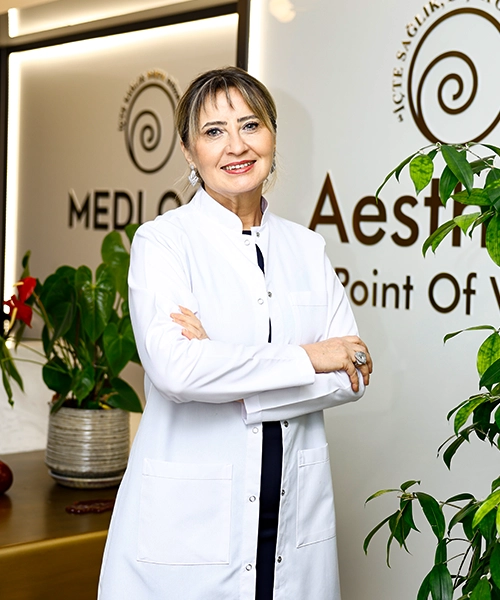
Dr. Handan Yavuz
MAKE AN APPOINTMENT