

Eyebrow Transplant After Microblading — Overcoming Failed Permanent Makeup Procedures and Returning to a Natural Look
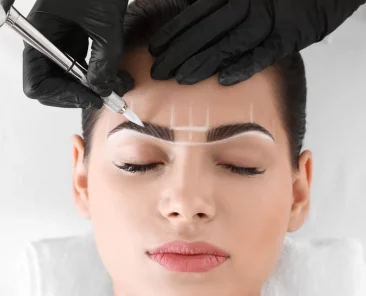
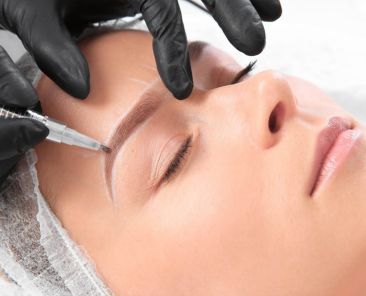
Permanent eyebrow makeup (microblading, Many people who undergo micropigmentation experience significant aesthetic dissatisfaction due to artificial colors that change over time (shades of blue, gray, and red), asymmetrical shape irregularities, or thickening of the contour lines. Patients seeking a permanent and natural solution rather than having the area re-tattooed to cover up this artificial appearance, Eyebrow Transplant After Microblading Removal They wonder whether they can or cannot have it done. Scientifically speaking, the answer to this question is: Yes, it is definitely possible. In fact, it is the only medical way to reverse the effects of failed cosmetic procedures and regain your natural hair.
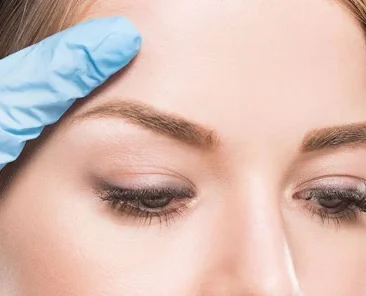
At our clinic, led by Dr. Handan Yavuz, we follow a special restoration protocol for patients who have previously had permanent makeup done and now regret it. Performing an eyebrow transplant directly without first removing the chemical pigments beneath the skin can cause artificial colors to seep through the new hairs, compromising the aesthetic outcome. For this reason, we first cleanse the skin using laser technologies, then wait a specific period for the tissue to heal on its own, and finally perform the procedure without shaving. Long FUE Performing natural eyebrow transplants using this technique is the healthiest method.
To learn more about the side effects of permanent makeup and the damage it causes to the skin, The Risks of Permanent Eyebrow Makeup You can take a look at our article. We’ve also prepared a comprehensive guide for our patients who are feeling uncertain Microblading or eyebrow transplantation? The comparison guide will also help you in your decision-making process.
The Laser Eyebrow Removal Process and Skin Biology
The laser permanent makeup removal procedure is performed using Q-Switch (Nd:YAG) or picosecond laser devices. During this procedure, the laser beams penetrate the epidermis and directly target the large pigment particles accumulated in the dermis. The sudden heat and shock waves generated by the laser break the pigment particles down into microscopic fragments. These fragmented pigment particles are then ingested by macrophages—the body’s “scavenger” cells—and eliminated from the body via the lymphatic system (circulatory system).
This process is not completed in a single day. An average of 4 to 6 weeks must elapse between sessions to allow the body to clear the broken-down pigment and for the skin to heal from inflammation (redness, peeling). Depending on the depth of the tattoo, the chemical quality of the ink used, and its color, the removal process may take 2 to 4 sessions.
Timeline for the Stages of Weeding and Planting
The steps and biological waiting periods involved in the process of removing failed permanent makeup and replacing it with a natural Long FUE eyebrow transplant are summarized in the table below:
| Step Name | Average Duration | Biological Processes Beneath the Skin | Critical Care |
|---|---|---|---|
| 1. Laser Removal Sessions | Depending on the quality of the paint, 1–3 months (2–4 sessions) | The dye pigments are broken down by the laser and eliminated through the lymphatic system. | After the session, the eyebrow area should be moisturized and protected from the sun. |
| 2. Tissue Repair Phase | 4–8 Weeks After the Last Session (Waiting Period) | Dermal inflammation subsides, the skin barrier regenerates, and circulation returns to normal. | Do not apply any chemicals to the skin, and do not exfoliate or scrub it vigorously. |
| 3. Long FUE Eyebrow Transplant | Single Session (3–5 Hours) | Live grafts harvested from the donor site are placed into fresh microchannels. | Avoid contact with water and direct sunlight for the first 14 days. |
| 4. Natural Outcome and Recovery | 6–12 Months (Ongoing Process) | After a shock loss, the remaining hair follicles begin to grow in the shape of eyebrows. | Shaping is achieved through periodic trimming and combing. |
Why Is It Necessary to Wait After a Laser Treatment?
Many patients want to have eyebrow transplants the very next day, as soon as their removal session is over. However, this is highly inadvisable from a medical standpoint. You must wait at least **4 to 8 weeks** after your last laser session. The reasons for this are as follows:
- Subclinical Inflammation (Hidden Inflammation): Even if the skin’s surface appears to have healed after laser treatment, an inflammatory reaction continues at the microscopic level in the deep dermis. If hair is transplanted into this inflamed tissue immediately, the transplanted hair follicles (grafts) cannot be nourished and will die before they can take root.
- Weakening of the Skin Barrier: Laser treatment temporarily weakens the skin's protective barrier. Creating surgical microchannels in skin that has been weakened and made more sensitive significantly increases the risk of infection.
- Completion of Pigment Excretion: It takes time for the broken-down paint residues to be completely eliminated through the lymphatic system. Grafting the roots onto healthy tissue is essential for long-term success.
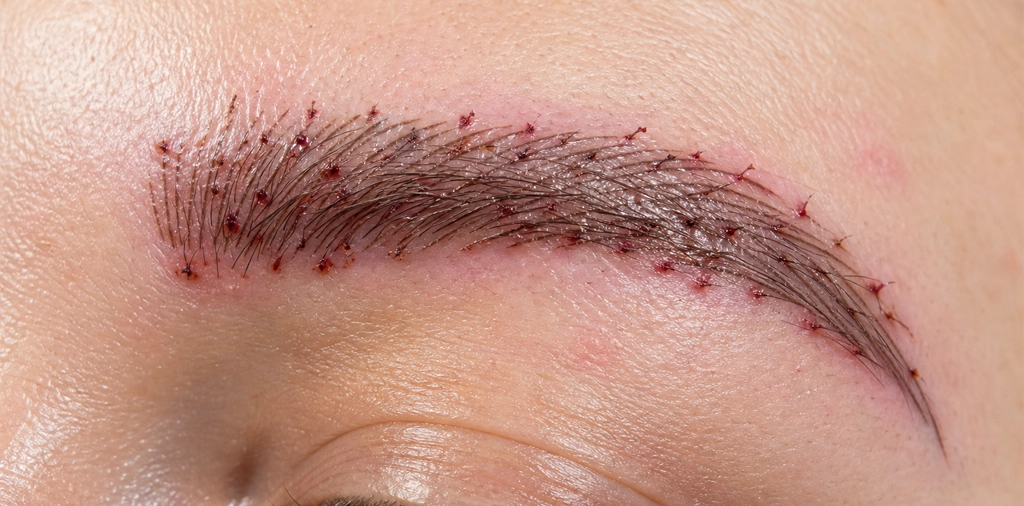
The Effectiveness of the Long FUE Method in Post-Shaving Hair Transplants
After laser hair removal, slight hardening (micro-scars) may remain in the skin’s structure. Performing a hair transplant on this hardened tissue requires greater care and expertise than on normal skin. At this stage, the shave-free Long FUE technique offers a significant advantage:
- Long Hair Reference: Since hair follicles are transplanted at their full length in the Long FUE method, the direction and angle of the few remaining natural eyebrow hairs are immediately identified after the procedure. The newly transplanted follicles are placed among these natural hairs with flawless precision.
- Tissue Stimulation: When microchannels are created using the Long FUE method, blood circulation in scarred skin is stimulated. This triggers the self-repair of the damaged skin and increases collagen production.
- Compared to traditional methods, the recovery process is much faster. To learn more about traditional methods, Classic FUE eyebrow transplant You can check our page.
Managing Expectations During the Clearing and Planting Process
Eyebrow transplantation following microblading removal requires the patient to patiently combine two separate processes. First, the skin must be cleared of pigment, and then the tissue must be allowed to heal before transplantation can take place. For this reason, we provide our patients with a realistic timeline from the very beginning.
Patients who were dissatisfied with their previous procedure usually want a quick solution. However, a rushed transplant can lead to graft loss in tissue that has not yet healed. Proper timing is the most important factor in achieving a natural-looking, long-lasting result.
We’ll explain in detail how to care for your skin between removal sessions and which products to avoid. Unnecessary procedures performed on the skin during this period directly affect the success of the subsequent transplant.
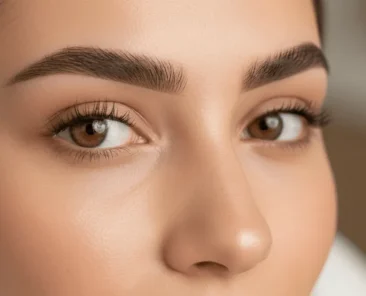
Once the process is complete, the artificial look created by the permanent pigment is replaced by a natural-looking eyebrow made up of your own hair follicles. This is exactly what makes it worth the wait.
Patient Satisfaction with the Return to Natural Eyebrows
Patients who have completed the microblading removal process often notice the difference immediately when they achieve eyebrows made up of their own hair follicles. The flat, one-dimensional appearance of the pigment is replaced by a vibrant structure that changes in depth depending on the light.
The most satisfying aspect of this transition is that eyebrows are now a permanent solution that doesn’t need to be “refreshed” like makeup. When you look in the mirror in the morning, your eyebrows are already in place.
For patients with whom we plan the removal and regrowth process together, we explain in advance what to expect at every stage. Properly managing expectations is the most critical factor in ensuring satisfaction at the end of the process. A transition completed without rushing is the safest approach, both for skin health and from an aesthetic perspective.
When planning eyebrow transplantation after microblading removal, each patient’s skin type and pigmentation history is unique. That’s why, instead of a one-size-fits-all schedule, we create a personalized roadmap for you.
While a few removal sessions are sufficient for some patients, others require a longer waiting period to allow the tissue to fully heal. This difference is determined by the depth of the existing pigment and the skin’s response. By monitoring the process together, we accurately identify the optimal time for the procedure and achieve lasting results.
Frequently Asked Questions
During laser treatment, you may feel a slight sensation on your skin, similar to a rubber band snapping against it or a series of gentle pricks. Thanks to the topical anesthetic creams applied before the procedure, this discomfort is minimized. Each session typically lasts 5–10 minutes.
Since chemical peels contain acids, they can cause severe chemical burns and deep scarring on the skin. After such procedures, the skin takes much longer to heal (at least 3–6 months). You must ensure that the skin has fully healed before beginning the procedure.
No. Laser removal procedures performed at the correct wavelength do not damage your natural eyebrow hair follicles; they only break down the artificial dye pigments. However, the dye itself may have already damaged your hair follicles before the removal procedure.
If there is a dark, reddish, or blue outline along the lower edge, the pigment will continue to show through from the bottom even after the eyebrows have been tattooed. This results in an unnatural, smudged, and unattractive appearance. It is recommended that it be removed for the best results.
Laser treatment does not destroy hair follicles while they are dormant. However, if the follicles have already died due to chemical damage from the dye or improper microblading incisions, hair will not grow back on its own after laser treatment. In this case, the only solution is eyebrow transplantation.
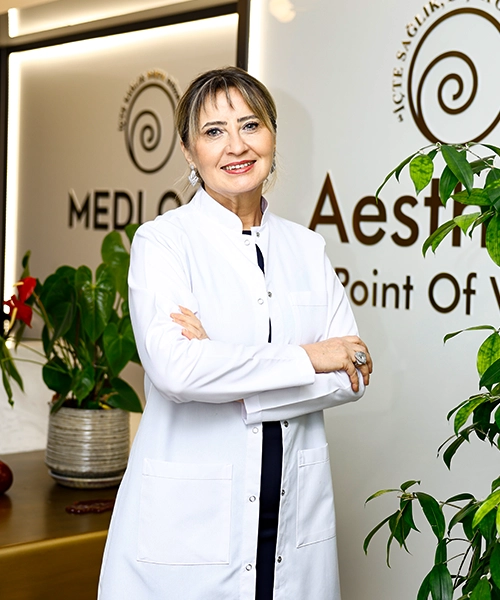
Dr. Handan Yavuz
MAKE AN APPOINTMENT