

Eyebrow Transplant During Pregnancy and Breastfeeding
Highlights
- eyebrow transplant is not performed during pregnancy; the procedure is postponed until after childbirth.
- Implant surgery is not recommended during breastfeeding; it should be scheduled after breastfeeding has ended.
- The decision to postpone the procedure is based on the fact that it is not urgent: unnecessary risks are not taken during pregnancy for an elective procedure.
- Hormonal fluctuations during pregnancy and after childbirth temporarily affect eyebrow hair; even if a transplant is performed during this period, the results cannot be evaluated.
- After childbirth, it is generally recommended to wait until breastfeeding has ceased and hormone levels have stabilized before starting eyebrow transplant; for most patients, this takes between six months and one year.
- Microblading and permanent makeup should also be postponed during pregnancy for the same reason.
Short answer: eyebrow transplant is not performed during pregnancy, nor is it recommended during breastfeeding. This is not because there is proven evidence that the procedure harms the pregnancy; rather, it is because eyebrow transplant is a non-urgent, postponable procedure, and no unnecessary interventions should be performed during this period. This article explains the rationale for postponing the procedure and discusses when and under what circumstances the procedure can be performed after childbirth.
Can Eyebrow transplant Be Performed During Pregnancy?
No. The eyebrow transplant procedure is not performed on patients who know they are pregnant or who may be pregnant. During the examination, patients are asked about their pregnancy status, and for those planning a pregnancy, the timing of the procedure is adjusted accordingly.
This rule is not specific to eyebrow transplant. The same approach applies to all procedures performed for aesthetic purposes and not for medical necessity. Laser treatments, dermal fillers, permanent makeup, and similar procedures should also be postponed during pregnancy.
The fact that the patient wishes to undergo the procedure during a specific stage of pregnancy—for example, during the second trimester—does not change the situation. A procedure that can be postponed is not performed at any stage of pregnancy. General eligibility criteria for Eyebrow transplant Who is eyebrow transplant suitable for? It is explained in detail in the article.
Why Is a Postponement Recommended?
The reasoning behind the postponement is simple. Eyebrow transplant is a procedure performed to improve the patient’s appearance, not to protect her health. There is no medical necessity for it. There is no reasonable justification for assuming any additional risk—no matter how small—during pregnancy for such a procedure.
The source of risk is not the procedure itself, but the factors surrounding it: the anesthesia used, medications administered afterward, stress during the procedure, remaining in the same position for an extended period, and the risk of infection. Each of these is an issue that must be evaluated separately during pregnancy, and none of them offers a benefit that would justify undergoing the procedure during pregnancy.
The second reason relates to the outcome. Hormonal fluctuations during and after pregnancy affect hair growth; the results of a hair transplant performed during this period cannot be accurately assessed. Postponing the procedure is preferred for both safety and the predictability of the outcome.
The Use of Local Anesthesia During Pregnancy
Eyebrow transplant is performed under local anesthesia. This form of anesthesia has a much more limited area of effect compared to general anesthesia and can be used during pregnancy in necessary situations, such as dental procedures. It would not be accurate to say that local anesthesia is definitely harmful during pregnancy.
However, this distinction is essential. A tooth extraction may be a medical necessity that cannot be postponed; eyebrow transplant, on the other hand, can always be postponed. The use of anesthesia during pregnancy for a non-essential procedure is not recommended in current guidelines.
Furthermore, anesthesia for eyebrow transplant does not consist of a single injection; the eyebrow region and the donor site are anesthetized separately, and the procedure takes several hours. During this time, the patient must remain still for an extended period while lying down or leaning forward; in the later stages of pregnancy, maintaining these positions for long periods poses a challenge in and of itself. General information about the anesthesia process Local Anesthesia for Eyebrow Transplantation It appears in his article.
Postoperative Medications and Pregnancy
After Eyebrow transplant, patients are generally prescribed medications to prevent infection and reduce edema. While some of these medications can be used during pregnancy, others cannot; only the obstetrician monitoring the patient can determine which medication is appropriate during which stage.
In a patient scheduled for a Eyebrow transplant procedure, skipping or changing these medications due to pregnancy means that postoperative care will be inadequate. Inadequate care both increases the risk of infection and negatively affects graft take.
For this reason, the physician prefers to postpone the procedure entirely rather than adjust the medication regimen for a pregnant patient. The use of medications during pregnancy is not the subject of this article; no specific medication names or recommendations are included here. Pregnant patients should consult their own physicians regarding any medication.

The Effect of Hormonal Changes During Pregnancy on the Hair Growth Cycle
Estrogen levels rise significantly during pregnancy. Estrogen keeps hair in the growth phase for a longer period of time. For this reason, the hair and eyebrows of pregnant women generally appear fuller and shinier; hair that would normally fall out does not shed and accumulates.
This appearance is not permanent. When hormone levels drop rapidly after childbirth, a significant portion of the hair that was in the growth phase enters the resting phase all at once and falls out within a few months. This cycle masks the true condition of eyebrow throughout pregnancy.
Even if a eyebrow transplant configuration had been used during pregnancy, the fact that the current eyebrows configuration appears full would mislead the design, and postpartum shedding would have altered the result. A design created before hormonal balance has stabilized does not accurately reflect the permanent eyebrow configuration.
Can You Take Eyebrow transplant While Breastfeeding?
The eyebrow transplant procedure is also not recommended during breastfeeding. The rationale is similar to that for pregnancy: anesthetics and post-procedure medications may pass into breast milk. The effect of these medications on the baby varies depending on the type of medication, and this assessment is the responsibility of the pediatrician and the obstetrician.
Short-term use of medication during breastfeeding is possible in some cases, and there are solutions such as temporarily stopping breastfeeding. However, all of these solutions involve disrupting the mother’s and baby’s routine for a procedure that is not medically necessary. Since the Eyebrow transplant procedure can be postponed, there is no need for such adjustments.
In addition, the breastfeeding period is a time when postpartum hormonal fluctuations continue. Eyebrows remains variable during this period; it cannot be clearly assessed following implantation. Waiting until breastfeeding has ended and a few months have passed provides a more suitable foundation in terms of both safety and outcomes.
Postpartum Eyebrow loss: Temporary or Permanent?
Hair loss and eyebrow loss that occur after childbirth are temporary in most women. This condition is called telogen effluvium (generalized, temporary hair loss). It begins two to four months after childbirth, lasts for a few months, and resolves on its own as hormone levels stabilize. Although it is less noticeable than hair loss, it can still be noticeable.
This hair loss is not a reason to undergo eyebrow transplant, as most of the lost hair will grow back. Since eyebrow tends to thin out during the postpartum period, patients considering a hair transplant are advised to wait first.
If hair loss lasts longer than one year, is very pronounced, or is concentrated in a specific area of the scalp, an investigation is conducted to determine whether it is accompanied by another underlying cause. Postpartum thyroid disorders and iron deficiency are common during this period and can prolong the condition; how these causes are investigated eyebrow loss due to thyroid and hormonal causes is described in the article. In such cases, an evaluation by a dermatologist or internist is recommended.
When Can Eyebrow transplant Be Performed After Childbirth?
It is not appropriate to specify a single date for postpartum hair transplantation; the timing depends on the duration of breastfeeding, the course of hair loss, and the patient’s overall recovery. The table below provides a general framework.
| Period | Compliance | Rationale |
|---|---|---|
| Pregnancy | Not appropriate | Unnecessary risk for an elective procedure; hormones mislead eyebrowı |
| The first 3 months after birth | Not appropriate | Hormonal fluctuations continue; hair loss may not have started yet |
| Breastfeeding period | Not appropriate | Medications can pass into breast milk; eyebrow is still variable |
| The first 3 months after weaning | It is generally expected | To stop hair loss and see improvement, |
| 3 to 6 months after the end of breastfeeding | Can be evaluated | Hormone levels have stabilized, and the long-term status of eyebrow has become clear |
| One year after giving birth, if you have stopped breastfeeding | Appropriate | If permanent thinning is observed, a transplant may be scheduled |
In mothers who are not breastfeeding, these periods may be shorter; hormonal balance is established earlier. Nevertheless, it is recommended to wait at least six months after childbirth and to ensure that hair shedding has completely stopped.
What Assessments Are Conducted After Breastfeeding Ends?
In a patient who presents for eyebrow transplant after breastfeeding has ended, the examination focuses on several key points. The first is whether the hair loss has stopped. The patient is asked if there has been any new hair loss in recent months; if hair loss continues, the cause is investigated.
Second, there is the patient’s overall health status. Thyroid function and iron stores are frequently affected during the postpartum period. The physician may request current lab results from the patient’s own doctor or recommend that these tests be performed. If the test results are abnormal, the procedure will be postponed until the values return to normal.
Third, there is the permanent state of eyebrow. Once the temporary shedding has completely resolved, the true shape and density of eyebrow become apparent. The diagnosis can only be made based on this pattern. In cases where eyebrow was already sparse before pregnancy, this evaluation takes less time; however, in cases where the thinning began during pregnancy, a longer waiting period may be required.
What Can Be Done for Eyebrows During This Period?
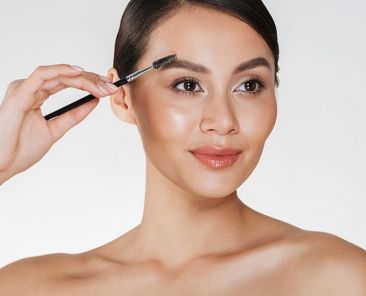
If the infrequent appearance of eyebrow during pregnancy and breastfeeding bothers the patient, temporary solutions can be used. Makeup products such as Eyebrow pencil, eyebrow powder, and eyebrow mascara are safe and reversible solutions.
Nutrition also supports hair health during this period. Adequate intake of protein, iron, and vitamins is part of the general recommendations provided by the obstetrician for pregnancy and breastfeeding; taking additional supplements for eyebrow is not recommended. The decision to take supplements is left to the physician.
Caution should be exercised regarding serums and growth products applied to the Eyebrow area. Some of these products contain ingredients that have not been tested during pregnancy and breastfeeding. Before using any product, the ingredients should be shown to a doctor. Comparison of other methods used in Eyebrows shaping with hair transplantation Microblading or eyebrow transplantation? It appears in his article.
Microblading and Permanent Makeup During Pregnancy
When Eyebrow transplant is postponed, some patients turn to microblading as a temporary solution, eyebrow lamination or considers permanent makeup. These procedures are also not recommended during pregnancy and while breastfeeding.
The reasons are similar: the skin is broken during the procedure, creating a risk of infection; the effects of the pigments used during pregnancy have not been sufficiently studied; and anesthetic creams are used in some procedures. In addition, the skin is more sensitive during pregnancy, and pigment retention is unpredictable; hormonal changes can alter the final color result.
In conclusion, no permanent or semi-permanent procedures are recommended for eyebrow during pregnancy and breastfeeding. During this period, makeup should be used instead, and a healthy evaluation should be postponed until after childbirth.
This content is from eyebrow transplant, which has experience in assessing patient eligibility and timing Dr. Handan Yavuz Prepared and reviewed by a (Medical Aesthetics Specialist).
Related articles: Who Is Eyebrow transplant Suitable For?, Local Anesthesia in Eyebrow transplant, At What Age Is the Eyebrow transplant Performed?.
Performed at our clinic at Nişantaşı-Harbiye eyebrow transplant You can contact us for information on our methods and to schedule an appointment.
Frequently Asked Questions
No, the eyebrow transplant procedure is not performed during pregnancy. The Eyebrow transplant procedure is not medically necessary and can be postponed; therefore, the additional risks associated with this procedure—such as anesthesia, medication, and infection—are not taken during pregnancy. It does not matter which stage of pregnancy you are in. Additionally, since pregnancy hormones can temporarily make eyebrow results appear fuller, the design created during this period will not reflect the permanent outcome.
The eyebrow transplant method is also not recommended during breastfeeding. The anesthesia used during the procedure and the medications administered afterward may pass into breast milk. Since hormonal fluctuations continue during this period, the eyebrows test results remain variable and cannot be reliably interpreted. It is recommended to wait until breastfeeding has ended and several months have passed; eligibility will then be assessed through an examination.
There is no set timeframe; it is expected that breastfeeding will end, hair shedding will stop, and hormonal balance will stabilize. An evaluation can be conducted three to six months after breastfeeding has ended. For most patients, this corresponds to at least six months to one year after childbirth. In mothers who are not breastfeeding, this period may be shorter; however, it is still necessary to confirm that hair shedding has completely stopped.
eyebrow loss that occurs during pregnancy and after childbirth is usually temporary. After childbirth, as hormone levels drop, hairs in the anagen phase shed en masse, and new ones grow back within a few months. If hair loss persists for more than a year or is very pronounced, underlying causes such as thyroid disorders and iron deficiency are investigated. Whether the thinning is permanent can only be determined after this evaluation.
Not recommended. During microblading and permanent makeup procedures, the skin is broken, pigment is applied, and an anesthetic cream is often used. The effects of pigments during pregnancy have not been sufficiently studied; there is a risk of infection; and hormonal changes make the final color unpredictable. No permanent or semi-permanent eyebrow treatments are recommended during pregnancy or while breastfeeding.
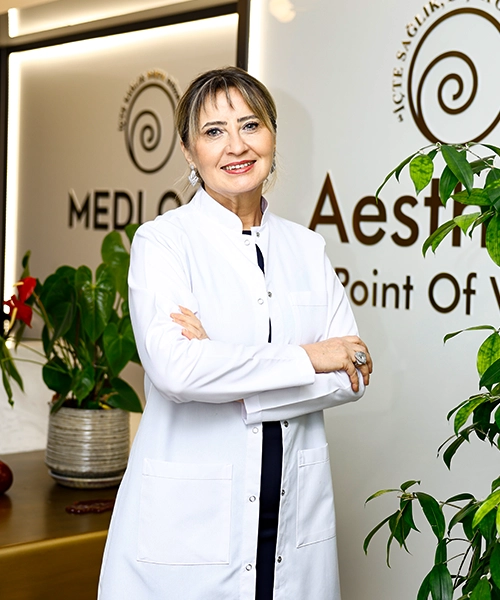
Dr. Handan Yavuz
MAKE AN APPOINTMENT