

Eyebrow Loss from Thyroid and Hormonal Causes
Highlights
- Eyebrow loss is often a sign of an underlying cause; thyroid dysfunction, iron deficiency, and hormonal fluctuations are among the leading causes.
- Thinning of the outer third of the Eyebrow is a finding that may warrant a thyroid evaluation.
- Because part of the eyebrows may return on its own after treatment, the decision to transplant should not be rushed.
- Eyebrow transplant only comes into play once the underlying cause has been brought under control and the shedding has stopped.
- If the values are not corrected before the procedure, the transplanted hair may also be affected for the same reason.
- For Eyebrow loss, the first point of contact should be a dermatologist or an internist; if necessary, an endocrinology evaluation is requested.
When Eyebrows begins to thin out, the first thing that often comes to mind is hair transplantation. However, eyebrow loss is frequently caused by thyroid dysfunction, iron deficiency, or hormonal fluctuations, and no treatment will yield lasting results unless these underlying causes are addressed. This article explains in which situations hormone-related eyebrow loss should be considered, what tests are required, and where eyebrow transplant fits into this picture.
When Is Eyebrow loss Normal, and When Isn't It?
Like all hair, eyebrow hair grows, rests, and sheds in a cycle. Losing a few eyebrow hairs each day is a natural part of this cycle and goes unnoticed. Since Eyebrow hairs have a short growth phase, they remain at a certain length for a long time, and a new one grows in once the cycle is complete.
There are certain signs that indicate whether hair loss has exceeded normal limits. Noticeable thinning in a specific area of the scalp—particularly the outer part—the absence of new hair growth, or new hair that is finer and shorter than before, suggests that the hair loss may be due to an underlying cause. If hair loss is accompanied by fatigue, weight changes, menstrual irregularities, or other hair loss symptoms, an evaluation becomes even more necessary.
In such cases, it is recommended to investigate the cause before considering treatment with eyebrowa. Treatments administered without identifying the cause provide only a temporary solution and may mask the progression of the problem.
How Does the Thyroid Gland Affect Hair?
The thyroid gland produces hormones that regulate how cells in the body use energy. These hormones also affect the hair follicle cycle; whether a hair enters the growth phase, how long it grows, and when it transitions to the resting phase are all related to thyroid hormone levels.
When the thyroid gland produces too little hormone, the hair growth cycle slows down. More hairs remain in the resting phase, new hair growth is delayed, and existing hairs become thinner. When the thyroid gland produces too much hormone, the cycle speeds up; hairs complete the growth phase early and fall out prematurely.
This effect is noticeable earlier in eyebrow than in hair. Because the growth phase of Eyebrow hair is short, a disruption in the cycle quickly becomes apparent as thinning in eyebrow. Thinning of eyebrow related to thyroid function may sometimes be the first noticeable sign of a thyroid disorder.
Hypothyroidism and the Thinning of the Outer Third of the Eyebrow
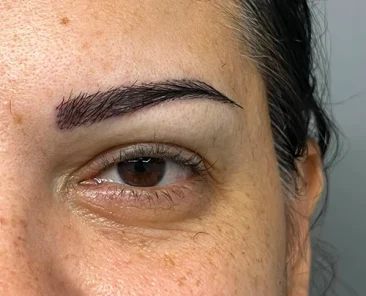
The association between hypothyroidism (underactive thyroid) and eyebrow loss has long been recognized in the medical literature. In this condition, the outer third of eyebrow—that is, the portion near the tail—typically becomes sparse or disappears entirely. This finding is known in medicine as “Hertoghe’s sign,” named after the physician who first described it; it is not a diagnosis in itself, but rather a sign that requires further evaluation.
The reason why the outer third is particularly affected has not been definitively explained; it is thought that the hair follicles in this area are more sensitive to hormonal changes. Thinning is usually accompanied by fatigue, feeling cold, weight gain, dry skin, and hair loss.
If a patient notices hair thinning on the outer part of the Eyebrow area, it is recommended that they consult a dermatologist or internist and undergo thyroid function tests. Since this finding can also result from causes unrelated to the thyroid, a definitive evaluation must be performed by a physician.
Hair Loss Caused by Hyperthyroidism
Hyperthyroidism (overactive thyroid gland) affects hair through a different mechanism. In this accelerated cycle, hair completes its growth phase quickly, becomes thinner, and falls out prematurely. In this case, hair loss may not be limited to a specific area of the scalp but can be more widespread.
Hair loss associated with hyperthyroidism typically manifests as diffuse, fine, and brittle hair. Symptoms such as weight loss, palpitations, sweating, and irritability may accompany the hair loss.
In some patients, the treatment for thyroid disease itself may temporarily affect the hair growth cycle. This is a condition that occurs at the start of treatment and resolves over time; the patient should inform their doctor rather than changing the treatment on their own. This article does not contain any recommendations regarding thyroid treatment; treatment decisions are made solely by the treating physician.

Iron Deficiency and Ferritin Levels
Iron is one of the essential minerals required for the proliferation of hair follicle cells. Ferritin is the marker that indicates the body’s iron stores. Even if anemia has not developed, low ferritin levels can affect the hair cycle; hair follicles have a harder time entering the growth phase and remain in the resting phase for longer.
Iron deficiency is particularly common among women. Menstrual bleeding, pregnancy, breastfeeding, a vegetarian diet, and certain digestive problems can lead to a depletion of iron stores. In such cases, eyebrow loss typically presents as a generalized form of thinning.
Measuring ferritin levels is one of the routine tests ordered as part of the eyebrow loss study. If the result is low, the doctor will determine the cause and decide whether supplementation is necessary; taking iron supplements on your own may not be beneficial and could even lead to other problems.
Vitamin D, Zinc, and Biotin Deficiency
Vitamin D plays a role in the transition of hair follicles to the growth phase. Low levels of vitamin D are common, particularly during the winter months and among people who work indoors. The role of vitamin D deficiency in eyebrow loss is not a determining factor on its own, but rather becomes evident when combined with other causes.
Zinc plays a role in the regeneration of hair follicle cells. Although deficiency is rare, it can occur in people with restricted diets or those with absorption issues. Biotin, on the other hand, is a vitamin that is frequently advertised; however, biotin deficiency is very rare in people with a healthy diet, and no benefit has been demonstrated from supplementation in the absence of a deficiency.
All three of these values can be measured through blood tests. The decision to take supplements should be based on the test results; taking supplements without first getting tested may not only be unnecessary but could also affect the test results in some cases. Comparison of Eyebrow sera and supplements with in-vitro culture Is it the eyebrow serum or the eyebrow transplant serum? It is also discussed in his article.
Hormonal Fluctuations During Pregnancy and After Childbirth
Rising estrogen levels during pregnancy keep hair in the growth phase; when this support disappears after childbirth, the accumulated hair enters the resting phase all at once. This condition is known as telogen effluvium (widespread, temporary hair loss) and resolves on its own in the months following childbirth.
The key point here is that the hair loss is temporary. For this reason, eyebrow transplant is not recommended during the postpartum period; it is advised to let the hair grow naturally and, if necessary, to check iron and thyroid levels. If hair loss persists for more than a year or is very pronounced, an investigation is conducted to determine whether there is an underlying cause.
Why procedures are postponed during pregnancy and breastfeeding, and how the postpartum timing is determined eyebrow transplant During Pregnancy and Breastfeeding It is explained in detail in the article.
Eyebrow Dilution During Menopause
With menopause, estrogen levels drop permanently. As estrogen’s effect of keeping hair in the growth phase diminishes, the hair becomes finer, the growth cycle shortens, and eyebrows thins out over time. This thinning generally progresses slowly and is observed throughout eyebrow.
Since thyroid dysfunction is also more common during menopause, thyroid evaluation is particularly important when eyebrow levels are low in this age group. Iron stores and vitamin D levels are also frequently monitored during this period.
Menopause-related thinning of the eyebrow area can create a suitable foundation for eyebrow transplant, provided there is no underlying disorder. This is because, in this case, hair loss is due to a permanent hormonal change rather than an active disease, and since the transplanted hair is harvested from the nape of the neck, it is not affected by this change. The decision is made, however, only after all test results have been reviewed.
Polycystic Ovary Syndrome and the Effects of Androgens
Polycystic ovary syndrome (a hormonal disorder originating in the ovaries) leads to high levels of male hormones, known as androgens, in women. Androgens have different effects on hair growth depending on the body region: while they increase hair growth on the face and body, they may cause some hair follicles on the scalp and eyebrow to shrink.
In this case, the changes observed in eyebrow are not the same in every patient. While eyebrows thickens in some patients, thinning is observed in specific regions of eyebrow in others. Symptoms such as irregular periods, acne, weight gain, and increased facial hair growth may accompany this condition.
The presence of these findings together warrants an evaluation by a gynecologist or endocrinologist. Eyebrow loss is only a small part of this clinical picture; the primary evaluation focuses on the underlying hormonal status and is beyond the scope of this article.
What Tests Should Be Ordered?
For a patient presenting with Eyebrow loss, the physician determines a list of tests based on the medical history and physical examination. The table below summarizes commonly ordered tests and their rationale; the physician decides which tests to order.
| Examination | What to Look For | Why is it important? |
|---|---|---|
| TSH, free T3, free T4 | The Function of the Thyroid Gland | Both working too little and working too much disrupt the eyebrow cycle |
| Thyroid antibodies | Autoimmune thyroid disease | Even when thyroid levels are normal, they may indicate an underlying problem |
| Ferritin | The body's iron stores | Low ferritin levels can cause hair loss even in the absence of anemia |
| Complete blood count | Anemia and General Health | Indicates the severity of iron deficiency |
| Vitamin D | Vitamin levels | A deficiency negatively affects the hair growth cycle |
| Zinc | Mineral content | A rare but significant cause of deficiency |
| Hormone panel (if necessary) | Androgens, estrogens, and related hormones | Evaluates hair thinning caused by polycystic ovary syndrome or menopause |
Test results are not interpreted in isolation but in conjunction with the patient’s medical history and physical examination findings. A value that appears to be within normal limits may still require evaluation depending on the patient’s condition. It is the physician’s responsibility to make this assessment.
If the Hormonal Cause Is Treated, Will the Eyebrows Return?
As long as the hair follicle remains alive, the hair can grow back once the underlying cause is resolved. Hair growth may recover within eyebrows months as thyroid levels normalize, iron stores replenish, or postpartum hormone balance stabilizes. This recovery usually begins to become noticeable three to six months later; since the hair growth cycle is slow, it may take up to a year to see the full results.
However, not every patient experiences full regrowth. If hair loss has persisted for a long time, some hair follicles may have shrunk or closed permanently. In this case, even if the condition improves, some areas of the scalp may remain thin.
Therefore, the recommended approach is to wait at least six months—preferably one year—after treating the underlying cause and observe eyebrow’s own ability to recover. If persistent thinning is present at the end of this period, eyebrow transplant may be considered as an option. Situations in which Eyebrow transplant is appropriate Who is eyebrow transplant suitable for? It is explained in detail in the article.
Eyebrow transplant: When Should It Be Considered in These Patients?
Eyebrow transplant is considered for patients with hormonally induced hair loss when three conditions are met. First, the underlying cause must be identified and brought under control; thyroid levels must be within the target range, iron stores must be replenished, and hormonal balance must be stabilized. Second, active hair loss must have ceased; there should have been no new hair loss in the past few months. Third, sufficient time must have elapsed to allow for spontaneous recovery, and permanent thinning must be evident.
When these conditions are met, the transplanted hair—since it is harvested from the back of the head—is more resistant to hormonal changes and can produce permanent results. Before the transplant, the physician may request the patient’s current test results from their primary care physician.
Eyebrow transplant does not treat the underlying condition; it merely fills in the permanently depleted areas. It is essential for the patient to clearly understand this distinction in order to set realistic expectations. A similar approach is applied in cases of immune-related causes, such as Alopecia areata; this topic eyebrow loss and eyebrow transplant following alopecia areata It is described in the article.
What Happens If a Transfer Is Performed Before Hormone Levels Return to Normal?
Two problems arise when hair transplantation is performed without proper control. First, the existing eyebrow hairs continue to shed. If the transplant is performed regionally, the natural hair around the transplanted hair will gradually thin out, causing the eyebrow pattern to appear uneven; the transplanted area will look full, while the surrounding area will remain sparse.
Second, although the transplanted hair is more resistant to hormonal effects because it originates from the nape of the neck, it is not completely immune to them. Severe thyroid disorders, severe iron deficiency, or uncontrolled hormonal fluctuations can also negatively affect the grafts’ ability to take root and enter the growth phase. Graft loss increases, and the results fall short of expectations.
For this reason, in reputable clinics, a history of hair loss is taken during the examination, and any necessary tests are ordered. Patients are advised not to view undergoing these tests as an unnecessary delay; this step ensures that the time and effort spent are not wasted.
This content is based on expertise in assessing the underlying causes of eyebrow loss Dr. Handan Yavuz Prepared and reviewed by a (Medical Aesthetics Specialist).
Related articles: Alopecia areata, Followed by Eyebrow loss and Eyebrow transplant, Who Is Eyebrow transplant Suitable For?, Regional Eyebrow transplant.
Performed at our clinic at Nişantaşı-Harbiye eyebrow transplant You can contact us for information on our methods and to schedule an appointment.
Frequently Asked Questions
Yes, both an underactive and an overactive thyroid gland can disrupt the hair growth cycle and lead to eyebrow hair loss. In cases of an underactive thyroid, the outer part of the eyebrow typically thins; in cases of an overactive thyroid, hair loss is more widespread. If eyebrow hair loss is accompanied by fatigue, weight changes, or palpitations, thyroid function tests are recommended.
Thinning of the outer third of the eyebrow is a finding that most commonly suggests an underactive thyroid gland. However, it does not establish a diagnosis on its own; certain skin conditions and age-related thinning can also produce a similar appearance. Patients who notice this finding are advised to consult a dermatologist or internist and have their thyroid levels tested.
It is possible, but only after the underlying cause has been brought under control and active hair loss has stopped. If a transplant is performed before the hair count returns to normal, not only will the existing eyebrows hair continue to fall out, but it will also be more difficult for the transplanted grafts to take root. That is why a waiting period of six months to one year is generally observed after treatment, and a hair transplant is considered once the extent of permanent thinning becomes clear.
If the hair follicles remain alive, hair may regrow within eyebrows months after thyroid levels have normalized. Recovery is usually noticeable after three to six months, and it may take up to a year to see the full results. If hair loss has persisted for a long time, some follicles may have permanently closed; in this case, certain areas of the eyebrows may remain sparse, and a transplant may be considered.
For the initial consultation, dermatology or internal medicine is appropriate. Based on the medical history and physical examination, these physicians will order thyroid, iron, and vitamin tests. Depending on the results, an evaluation by an endocrinologist or a gynecologist may be necessary. For Eyebrow transplant, however, consultation with a physician specializing in medical aesthetics should only take place after these evaluations are complete and the hair loss has stopped.
Dr. Handan Yavuz
MAKE AN APPOINTMENT