

Misinformation and Scientific Facts About Cosmetic Surgery
One of the biggest problems brought about by the Internet age is the rapid spread of misinformation in the fields of health and aesthetics. Many people experiencing eyebrow loss or thinning avoid permanent solutions due to unfounded claims circulating on forums, social media, or by word of mouth. This situation leads to serious misinformation, especially when it comes to delicate procedures such as eyebrow restoration. In this article, we will examine popular Myths About Eyebrow Transplants We will address this topic and debunk common misconceptions with scientific facts.
According to Dr. Handan Yavuz’s clinical approach, eyebrow transplantation is not a simple cosmetic procedure, but rather a structural facial restoration that must be performed with microsurgical precision. Claims circulating in popular beauty centers—such as “eyebrow transplants don’t look natural,” “your face will be unrecognizable after the procedure,” or “the transplanted hairs will fall out within a few years”—are myths stemming from the shortcomings of outdated surgical methods or mistakes made by inexperienced practitioners. Thanks to modern medicine, we now have shave-free Long FUE This technique is the most advanced method available, which dispels all these myths and produces natural results without disrupting the patient’s social life.
In this article, we will examine, one by one, the common myths that preoccupy our patients and make it difficult for them to make decisions. For those wondering about the criteria for the naturalness of the procedure Natural-Looking Eyebrow Transplant will explain the standards, and for our patients who have concerns before surgery, Fears About Eyebrow Transplants We will examine the physiological realities behind it.
Myth 1: “Transplanted Eyebrows Grow Upward and Don’t Look Natural”
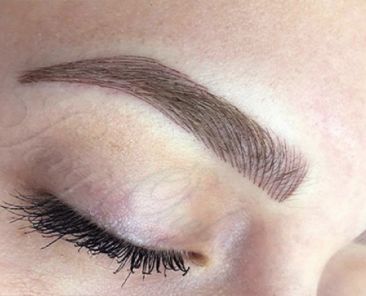
Scientific Fact: If the hairs appear stiff or unnatural after an eyebrow transplant, this is not due to the procedure itself, but rather to an incorrect angle of implantation. In a natural eyebrow, the angle at which the hairs grow is nearly parallel to the skin (approximately 10–15 degrees). If the hairs are implanted at a 45-degree angle, as is done in hair transplants, the eyebrows will grow straight up, creating a “grass-man” look.
Furthermore, since hairs are cut short in traditional methods, it is very difficult to determine their direction. However, in the Long FUE technique, hair follicles are transplanted while still long. This allows the physician to directly see the direction of the hair’s curl during the transplant and place it at a zero-degree angle to the skin. The result is eyebrows that grow horizontally and look so natural they are indistinguishable from your existing eyebrows.
Myth 2: “You Can’t Leave the House for Days After Surgery—Your Social Life Is Over”
Scientific Fact: This may be true for older-generation techniques, where the donor area (the back of the head) and the eyebrow area are completely shaved. However, in the newer-generation, shave-free Long FUE technique, the donor area is not shaved, and the hair on top completely covers the extraction sites. In the eyebrow area, since the hairs are implanted long, any micro-scabs or redness that may form are camouflaged by the longer hairs. The very next day after the procedure, you can return to your work, meetings, and social life without any restrictions.
Myth 3: “Transplanted Eyebrows Will Fall Out Completely Over Time”
Scientific Fact: Within the first month after the procedure, a temporary process known as “shock loss” occurs. The hair shafts fall out, but the transplanted hair follicles remain alive beneath the skin.
Since these live hair follicles are selected from the non-shedding hair on the back of the head, they possess the genetic trait that prevents them from falling out for life. Starting around the third month, your permanent eyebrows will begin to grow and will remain with you for life. Eyebrow transplantation is not a temporary makeup application; it is a permanent treatment.
Myth 4: “The Procedure Is Extremely Painful and Hard to Endure”
Scientific Fact: Eyebrow transplant procedures, local anesthesia The procedure is performed in a sterile operating room environment. Aside from a slight pricking sensation during the first 1–2 minutes when the anesthetic is injected, patients feel no pain or discomfort throughout the procedure (which lasts an average of 3–4 hours). Our patients can listen to music, watch a movie, or chat with the doctor during the procedure. After the procedure, any mild soreness can be easily managed with over-the-counter pain relievers.
Myth 5: “Only Women Can Get Eyebrow Transplants”
Scientific Fact: Eyebrow loss and thinning are not problems exclusive to women. Male patients can also experience significant eyebrow loss due to trauma, burns, alopecia, or genetic factors.
At our clinic, we frequently perform eyebrow transplants on male patients as well. Male eyebrow anatomy differs from that of women; the arch is flatter and the hairs are thicker. By creating designs tailored to the male facial structure and based on the golden ratio, we fully preserve a masculine appearance.
Eyebrow Transplant Myths vs. Scientific Facts: Comparison Chart
The table below summarizes the most common myths about eyebrow transplants and their counterparts in modern medicine:
| Myth / Claim | Common Misconception | Scientific Fact (Clinical Reality) | Critical Success Factor |
|---|---|---|---|
| Angle and Direction Deviation | All transplanted eyebrows grow straight and cannot be combed. | When hair is implanted at its natural angle of 10–15 degrees, it grows horizontally and naturally. | Instant visualization of the direction of curvature of long hair follicles using the Long FUE technique. |
| Duration of Persistence | Transplanted eyebrows fall out completely within 2–3 years. | Hair follicles in the nape of the neck that do not fall out remain active for life. | Proper selection of the donor site and extraction of the grafts without causing damage. |
| Recovery Time | There is massive swelling on the face, and it doesn't heal for weeks. | Mild swelling subsides in 2–3 days, and with Long FUE, you can resume your social life the very next day. | Use of micro-punch techniques and adherence to postoperative care guidelines. |
| Risk of Scarring | Permanent scars remain both on the back of the neck and on the eyebrow. | Thanks to the 0.6–0.7 mm micro-punches, there are no stitches or scars left behind. | Precision craftsmanship and microscopic channel-cutting technology. |
| Color Change | Transplanted eyebrows change color over time. | Hair follicles retain their natural color and do not fade like permanent makeup pigments. | Using your own living tissue instead of artificial pigments. |
The Importance of Medical Expertise in Debunking Myths
Unfortunately, many of the myths mentioned above are fueled by the consequences of botched procedures performed by unqualified individuals. Eyebrow transplants should be performed by medical doctors with in-depth knowledge of dermatology, plastic surgery, and hair anatomy. Designing natural-looking eyebrows requires analyzing anatomical limitations such as the patient’s eye structure, nose angle, and forehead width.
An incorrect canal depth can kill the hair follicle; an incorrect direction, on the other hand, can lead to aesthetic flaws that are very difficult to correct. To learn more about budgeting for different techniques, Long FUE eyebrow transplant prices You can browse our website, and for the limitations of classical techniques, Classic FUE eyebrow transplant You can check out our page.
Myth 6: “Eyebrow Transplants Look Unnatural Years Later”
This common misconception stems from past procedures performed at the wrong angle, the results of which became more apparent over time. With a properly planned procedure, however, the opposite occurs: the eyebrows adapt to the surrounding tissue over the years and look even more natural.
Over time, the transplanted hairs adapt to the structure of the eyebrow area, their growth rate slows down, and their texture becomes more similar to that of natural eyebrow hair. In other words, a properly performed transplant does not look artificial as it ages; on the contrary, it matures.
What matters is evaluating the result not based on how it looks on the first day, but on how it looks at the end of the first year. This process, undertaken with patience, lays the foundation for lasting natural results.
Myth 7: “Eyebrow Transplants Are Only Performed in Later Life”
Eyebrow transplantation is not a procedure based on age, but rather one based on need. Young people who are genetically predisposed to sparse eyebrows, those whose eyebrows have thinned as a result of years of tweezing, or those who have experienced loss due to trauma can be candidates at any age.
When designing treatments for young patients, the changes the face will undergo in the future are also taken into account. For this reason, age determines how the treatment plan will be personalized rather than whether the procedure is feasible.
The only requirement is to accurately identify the underlying cause of eyebrow loss. If there is a hormonal or temporary issue, that is evaluated first.
International Society of Hair Restoration Surgery (ISHRS) As noted in the sources, some of the common beliefs regarding hair restoration lack scientific basis.

The Impact of Social Media on Perceptions of Eyebrow Transplants
Social media plays a major role in the rapid spread of myths about eyebrow transplants. A single negative example, taken out of context, can lead to a perception that discredits the entire procedure.
Most images are shared without any information about the technique used, who created them, or the conditions under which they were created. In reality, however, it is the experience of the team executing the work—rather than the name of the technique—that determines the outcome.
When evaluating content, we recommend that you examine its source. It’s not just a single photo—a consistent body of work provides a true picture.
How Can You Find Accurate Information?
When making an aesthetic decision, the reliability of your information source is just as important as the decision itself. Instead of relying on anonymous forum comments, we recommend turning to explanations from doctors in the field and verifiable sources.
The best approach is a face-to-face consultation. Without seeing your actual eyebrows, any information you read online is not specific to you.
As Dr. Handan Yavuz, I believe in communicating with our patients in a way that informs rather than frightens them. Accurate information automatically debunks most myths.
Myth 8: “You Can Never Exercise After an Eyebrow Transplant”
This belief is partly true and partly exaggerated. You should avoid strenuous and sweaty workouts for the first two weeks, because excessive sweating can negatively affect the newly opened channels. However, this doesn’t mean you’ll have to stay away from exercise forever.
Light walks are already permitted in the first few days. By the end of the second week, most patients gradually return to their normal routine.
If you share your exercise routine with us, we’ll create a transition plan tailored to your workout routine. This isn’t a permanent restriction—it’s a temporary and manageable break.
From Fear to Satisfaction: Patients’ Shared Experience
A significant number of patients who come to our clinic are initially anxious due to myths they’ve heard. As they learn about the process step by step, this anxiety gives way to curiosity and confidence.
The phrase we hear most often after surgery is, “I wish I’d had it done sooner.” This feedback shows that fear is often fueled not by reality but by a lack of information.
That is why we consider providing information to be the first step in treatment. A process explained clearly can soften even the most entrenched prejudices.
Myth 9: “Not Everyone Can Get Eyebrow Transplants—They’re Too Expensive”
This belief stems from the assumption that the price is a single, fixed amount. In reality, the cost of an eyebrow transplant varies from person to person depending on the number of grafts needed, the condition of the eyebrow area, and the desired density. Filling in a small gap is not the same as creating a completely new design.
Moreover, because it is a permanent solution, it often proves to be a more economical investment compared to cosmetic procedures that need to be repeated over the years.
An accurate assessment can only be made during a face-to-face consultation. We’ll transparently share the plan and scope that’s right for you after we’ve examined your eyebrow structure.
Myth 10: “Transplanted Eyebrows Require No Maintenance”
Eyebrow transplantation is a permanent solution, but it’s not a “set-it-and-forget-it” result. Since the hairs grow at the same rate as your scalp hair during the first few months, regular trimming is necessary. This is a natural part of the process and will decrease over time.
Over time, your eyebrows will settle into their natural growth cycle, and caring for them will become significantly easier. However, you may still need to shape them from time to time.
Realistic expectations are the foundation of satisfaction. Knowing that your eyebrows have a lively and dynamic structure allows you to accurately assess the results.
Why Are Legends So Common?
The main reason these myths about eyebrow transplants have spread so quickly is that cosmetic procedures were long discussed only in the context of negative examples. Successful procedures often go unnoticed because well-done eyebrows look natural and don’t draw attention. In contrast, a botched result immediately stands out and sticks in people’s minds. This imbalance in visibility eventually creates a false general perception.
Hearsay also plays a role in this process. A negative experience had by an acquaintance is attributed to everyone without questioning which technique was used or under what conditions it occurred. In reality, however, it is the quality of the application—rather than the name of the method—that determines the outcome.
That’s why myths about eyebrow transplants often reflect incomplete information rather than the truth. Getting information from reliable sources is the best way to dispel these misconceptions.
An Informed Patient, the Right Decision
Whether an aesthetic decision is sound is directly related to how well-informed the patient is. A patient who understands the process, the risks, and realistic expectations can make a clear decision, free from the influence of myths. Our priority is not to guide you, but to equip you with the right information so that you can make your own decision.
During our consultations, we provide clear answers to all your questions and use language that is free of exaggeration and fear-mongering. The transparent sharing of information is the foundation of trust.
A patient who is properly informed approaches the process with greater calm and is more satisfied with the outcome. That is why we consider providing information to be the first and most important step in treatment.
Beyond the Legends: The Real Expectation
The common thread behind the myths surrounding eyebrow transplants is that most of them are based not on actual observation but on incomplete information. A properly explained process automatically dispels nearly all of these misconceptions. That is why we always prefer to discuss matters with our patients based on concrete information.
Realistic expectations both reduce pre-operative anxiety and increase satisfaction with the outcome. A balanced approach to providing information—free from both exaggerated promises and excessive fears—is the healthiest path.
We don’t present eyebrow transplantation as a miracle; instead, we clearly explain what it can achieve and its limitations. This honest approach lays the foundation for trust and long-term satisfaction.
When making an aesthetic decision, your most powerful tool is accurate information. Once you’ve debunked the myths surrounding eyebrow transplants, all that’s left is to calmly evaluate the option that best suits your face and expectations. As Dr. Handan Yavuz, our goal is not to scare you or sway you, but to clearly share the facts you need to make an informed decision. We’re always happy to listen to your questions and explain the process transparently.
Related guide: 5 Common Misconceptions About Eyebrow Transplantation.
Additionally, regarding risks: eyebrow transplant Losses and Real Risks.
Frequently Asked Questions
Yes. Since the hair follicles taken from the donor area retain their original characteristics, they grow like natural hair at first. For this reason, they need to be trimmed with eyebrow scissors every 10 to 15 days. However, after 1 to 2 years, this growth rate slows down as the hair adapts to the new area.
Since the donor hair follicles are taken from your own scalp, they match your natural hair color exactly. If you dye your hair or want to dye your eyebrows, you can dye your eyebrows 3 months after the transplant.
Doğru teknikle ve steril koşullarda ekilen köklerin tutma oranı %95’in üzerindedir. Bir kez tutunan kökler ömür boyu kalıcıdır ve hormonal bir hastalık veya travma olmadığı sürece dökülmez.
Tıraşsız Long FUE, hem operasyon anında doğal açının %100 doğru verilmesini sağlar hem de operasyon sonrasında herhangi bir tıraş görüntüsü oluşturmayarak hastaya maksimum sosyal konfor sunar.
As long as diabetes and high blood pressure are under control and you have your doctor’s approval, there is no reason why you cannot undergo an eyebrow transplant. All necessary pre-procedure tests are conducted in detail at our clinic.
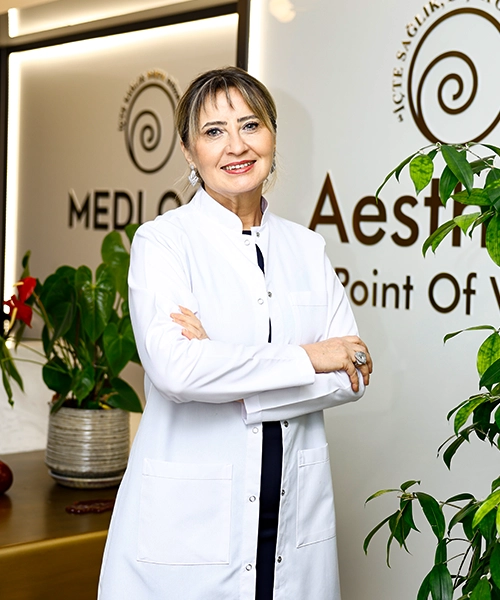
Dr. Handan Yavuz
MAKE AN APPOINTMENT