

Revision of Upright Eyebrow Transplants: Angle Error and "Grass Man" Syndrome
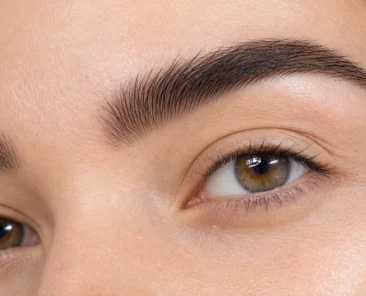
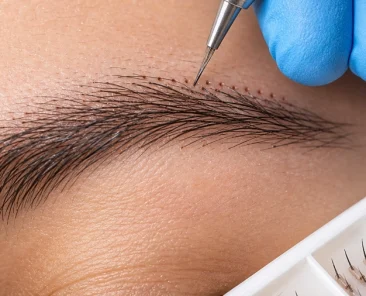
Although eyebrow transplantation is one of the most popular cosmetic procedures in recent years, it can lead to serious aesthetic problems when performed by non-specialists. The most common of these issues is the condition commonly referred to as “grass man” or “brush eyebrows,” which results from implanting eyebrow hairs at a perpendicular angle to the skin’s surface. While in a natural eyebrow structure the hairs grow almost completely flat against the skin, in cases of improper transplantation, the hairs grow straight up and forward, which not only negatively affects the patient’s physical appearance but also causes significant psychological distress. In such cases, revision surgery to correct the upright eyebrow grafts becomes unavoidable.
The revision procedures performed at our clinic under the leadership of Dr. Handan Yavuz involve the scientific analysis of these incorrect angles and restore the eyebrows to their natural, sloping shape. This unattractive appearance, resulting from improper transplantation, is a problem that can be completely corrected with proper planning and microsurgical precision. In this article, we will discuss in detail the underlying causes of overly upright eyebrows and how this condition is treated through revision surgeries.
Why Are the Natural Growth Angles of Eyebrow Hairs Important?
When examining the hair structures in the facial region, it becomes evident that eyebrows have a unique growth mechanism. While hairs on the scalp typically emerge at angles ranging from 45 to 90 degrees, for eyebrow hairs this angle is only 10 to 15 degrees. In other words, eyebrow hairs grow at an angle that is nearly parallel to the skin’s surface. Additionally, the direction of the hairs varies across different sections of the eyebrow:
- Origin Region (Medial): In this area, right next to the bridge of the nose, the hairs grow upward at a slight angle. Even in this transition area, the angle of the hairs should not exceed 20 degrees.
- Body Region (Central): In this central area, where the hair is thickest, the hairs run in a horizontal line toward the temples. The hairs on the upper part slope slightly downward, while those on the lower part slope slightly upward, forming a herringbone-like convergence line in the middle.
- Tail Region (Lateral): In this final section, which extends toward the temples, the hairs end by lying completely flat downward and outward. This is the area where the hairs lie flattest against the skin, with the angle dropping to as low as 10 degrees.
If the practitioner performing the procedure cannot replicate this three-dimensional architecture of direction and angle, the eyebrows will begin to stand up uncontrollably. This not only results in an unattractive appearance but also creates a stiff and stubborn hair texture that cannot be tamed even with makeup or setting gels. Even a slight 5-degree deviation in angle can disrupt the eyebrow’s natural posture, leading to an unnatural appearance.
Why Can't Eyebrows That Grow at a Right Angle Be Straightened with Gel or Hairspray?
Many patients try to tame their eyebrows with cosmetic products after a botched transplant. However, hair follicles (especially the thick ones taken from the back of the head) are genetically strong and stiff. When these follicles are implanted at a steep angle—such as 90 degrees—the hair’s growth vector becomes completely perpendicular to the skin. As the hair grows, it continues to stand upright, defying gravity.
Temporary solutions, such as cosmetic fixatives or eyebrow lamination, are not enough to overcome the natural resistance of these strong hair follicles. Overuse of chemical fixatives, on the other hand, can damage the hair follicles over time and lead to hair loss. The only permanent solution is surgical Correction of Faulty Eyebrow Transplants the implementation of these protocols.
How Is a Revision for Upright Eyebrow Transplants Performed?
Correcting angular eyebrows requires much greater precision and experience than a brow transplant performed from scratch. At Dr. Handan Yavuz’s clinic, this process is carried out in the following steps:
1. Removal of Faulty Roots (Extraction)
The first step is to identify and remove misaligned roots that protrude and disrupt aesthetic harmony. Llocal anesthesia Using micro-punch instruments (0.6 mm in diameter), these roots are removed one by one. During this process, it is essential to cause minimal damage to the skin tissue. Clearing scar tissue left over from the previous surgery and preparing a smooth surface for the new hair follicles are critical objectives of this stage.
2. Canal Preparation Using the Natural Angle (Lateral Slit)
New microchannels are created in place of the removed roots or within the natural boundaries of the eyebrow. At this stage, the channels are positioned completely parallel to the skin at an angle of 10–15 degrees. The direction of the channels is guided with millimeter precision according to the anatomical regions of the eyebrow (start, body, tail). Using sapphire-tipped blades when creating the channels reduces tissue trauma and accelerates healing.
3. Implantation of New Hair Follicles Using the Long FUE Technique
In correction procedures Long FUE The use of the “unshaven, long-root” technique offers a crucial advantage. This is because when hair strands are left long, the hair’s natural curve and direction of curvature can be clearly seen with the naked eye. When the curved portion of the hair is positioned to match the curve of the skin, the eyebrow grows in a flat, skin-hugging form as it extends. Since it is impossible to predict the direction of this curvature in short-cut grafts, the chances of success in revision procedures are reduced.
When procedures are performed without proper planning, using incorrect angles and unsuitable grafts, patients may end up with results that are aesthetically unsatisfying and look unnatural. This situation places a significant psychological burden on individuals and can lead to negative consequences, including withdrawal from social life.
Fortunately, thanks to modern medicine and advanced microsurgical techniques, it is possible to correct botched eyebrow transplants. Known as revision or correction surgeries, these procedures aim to correct technical and aesthetic errors made during the initial surgery and restore the eyebrows to a natural shape that harmonizes with the facial anatomy.
At our clinic, revision procedures led by Dr. Handan Yavuz are planned to be entirely personalized and based on scientific analysis. In this guide, we will examine in detail the causes of failed eyebrow transplants, correction methods, and the role of modern techniques in this process. Our goal is to eliminate the aesthetic concerns caused by a poorly performed procedure and restore the face’s natural harmony.
The Anatomical and Physical Realities of Eyebrow Transplantation
To perform a successful eyebrow transplant and avoid mistakes, it is essential to have a thorough understanding of the eyebrow’s anatomical structure. Eyebrow hairs have very different characteristics from scalp hair. If these anatomical differences are ignored, the transplant is bound to fail:
- Exit Angles: While scalp hair typically grows at angles ranging from 45 to 90 degrees from the scalp, eyebrow hairs grow at extremely flat angles, approximately 10 to 15 degrees. Failing to capture this flat angle causes the eyebrows to appear upright. As one moves from the center of the eyebrow toward the edges, this angle becomes even narrower, giving the appearance of being almost completely flush with the skin.
- Change of Direction: Eyebrows do not grow in a single direction. The inner part of the eyebrow (near the nose) grows upward, the middle section grows horizontally toward the temples, and the outer part grows downward and outward. These directions must be precisely replicated during the transplant procedure. The angle of each hair follicle must be in harmony with the angles of the adjacent hairs.
- Single-Family Home: Natural eyebrow follicles consist almost entirely of single hair follicles. In the scalp, however, double, triple, or quadruple grafts (follicular units) are common. Directly implanting multiple hair follicles into the eyebrow area creates an unnatural and coarse appearance. Therefore, it is essential that grafts be meticulously separated into single units under a microscope prior to transplantation.
What Are the Most Common Mistakes in Eyebrow Transplantation?
We can categorize the most common mistakes we encounter in patients who apply to our clinic for revision surgery as follows:
1. Incorrect Takeoff Angle and Direction (Grass Man Look)
The most common technical error is implanting grafts into the eyebrow skin at a very steep angle (45–90 degrees). This causes the eyebrows to grow forward, resulting in an unnatural appearance commonly referred to as a “grass man” or “brush.” Patients experiencing this issue are often forced to use gel or styling products constantly to tame their eyebrows.
If an angle error is accompanied by a directional error, the eyebrows take on a complex and irregular appearance. In such cases Revision of eyebrow transplantation with a straight technique The incorrect grafts must be removed one by one and re-implanted at the correct angle. These incorrect angles completely distort the expression in the person’s eyes, giving them an unnatural stiffness.
2. Use of Multiple Grafts and an Unnatural Appearance
Implanting multi-grafts (roots containing 2 or 3 hair strands) used in hair transplantation into the eyebrow area without separating them results in eyebrows that appear thick, stiff, and unnatural. In a natural eyebrow, hair follicles grow individually. In areas where multi-grafts are implanted, hair bundles form, and this makes the artificial appearance noticeable even from a distance. This not only affects the aesthetic appearance but also makes combing and styling the eyebrows difficult, as multiple thick hairs emerging from a single follicle can bend in different directions.
3. Poor Eyebrow Design and Asymmetry
Designs created without taking into account the face’s golden ratios, bone structure, and eye spacing can give the person an aggressive, bewildered, or tired expression. Eyebrows that are too thick, too thin, or positioned too close together or too far apart disrupt the face’s overall harmony. Additionally, asymmetry between the two eyebrows is one of the most noticeable design flaws. While natural eyebrows may not possess perfect symmetry, noticeable asymmetries created during the procedure are immediately noticeable to the human eye and can be unsettling.
4. Scarring in the Donor Site and Recipient Area (FUT Complications)
In hair transplants performed using the FUT (Strip Method), an older technique, a linear scar remains in the donor area, while indentations or bumps (skin irregularities) may occur in the recipient area due to thickened channels. This type of Common mistakes in eyebrow transplantation, ...causes cosmetic damage both in the nape of the neck and the eyebrow area. The channels created in the grafting area using thick instruments may collapse over time, resulting in an orange-peel-like texture.
Methods for Correcting Failed Eyebrow Transplants: A Scientific Approach
Correcting a botched eyebrow transplant requires far more experience, patience, and precision than performing an eyebrow transplant for the first time. At Dr. Handan Yavuz’s clinic, the scientific protocol followed for correcting botched transplants consists of the following steps:
The Gender Factor and Design Differences in Revision Planning
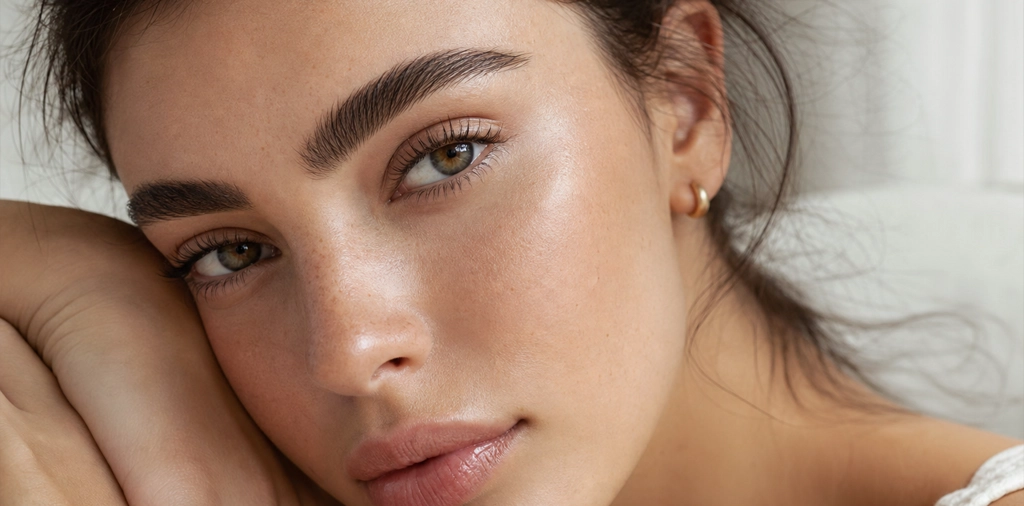
The eyebrow structures of male and female patients differ significantly. This should also be taken into account when planning revision surgery for steeply arched eyebrows. In women, eyebrow hairs are generally finer in texture and grow as close to the skin as possible.
The curve of a woman’s eyebrow is more pronounced and arched. For this reason, in female patients, the angles must be implanted at nearly 10 degrees—that is, at a nearly horizontal angle—relative to the skin.
In men, however, eyebrow hairs are thicker and coarser. The eyebrow structure follows a straighter and thicker line. In revision procedures for male patients, while maintaining the skin’s sensitivity to flatness due to the hair’s coarse texture, the upward transition at the start of the eyebrow can be emphasized more distinctly.
In men, the masculine appearance of the face is preserved by avoiding overly curved designs. For both genders, the goal is to eliminate the old, artificial look and give the face the most natural appearance possible.
Synchronization of Transplanted Eyebrows with the Natural Hair Growth Cycle
After the revision, the newly transplanted hair follicles begin to adapt to their new microenvironment in the eyebrow area. Hair follicles harvested from the back of the head typically have a longer growth (anagen) phase. However, after being transplanted to the eyebrow area, these follicles adapt to the hormonal and blood circulation characteristics of the recipient site, gradually slowing their growth rate over time.
This process is a biological adaptation and ensures that the transplanted eyebrows remain thinner and shorter over time. Brushing the eyebrows regularly and supporting their direction during the adaptation process helps keep their angles permanently flat.
Comparative Effects of Planting Methods on Yield
The table below compares the effectiveness of different surgical approaches used to correct arched eyebrows:
| Criteria | Revision Using FUT | Revision with Classic FUE | Revision with Long FUE |
|---|---|---|---|
| Seeing the Curvature of a Hair | Impossible (the roots are too short) | Very difficult (the hairs are 1–2 mm long) | Perfect (the hairs are their natural length) |
| Natural Slope Ratio | Düşük (%50-60 başarı) | Orta (%75-80 başarı) | En Yüksek (%95-98 başarı) |
| Post Process View | Stitched and rough appearance | Shaved and scaly appearance | No shaving, an instant natural look |
| Neck Comfort | A linear, permanent scar | Partial trimming is required | A donor site that requires no shaving and is completely concealed |
As you can see, being able to see the hair’s natural curl is critical when shaping eyebrows that grow upward. For this reason, Classic FUE eyebrow transplant Instead, the Long FUE technique has become the most important key to success in eyebrow revision procedures performed at a right angle.
Post-Revision Recovery and the Shock Shedding Process
The recovery process following a revision procedure is similar to that of a standard eyebrow transplant. Mild swelling and redness in the first few days after the procedure are normal. The small holes created by the micro-punch tools close quickly within 24–48 hours. Mild scabbing, which begins on the third day, falls off completely around the 10th day.
The “shock loss” phase begins in the 3rd to 4th weeks following the procedure. During this period, the long hairs that were implanted will fall out, but the roots remain permanently beneath the skin. After the shock loss period, starting in the third month, new eyebrow hairs begin to grow flat against the skin and in the correct directions. Full and final results are observed between 10 and 12 months.
During this process, it is extremely important to follow the specific washing and care instructions recommended by our clinic in order to preserve the angle of the new hair follicles. Previous procedures that left scars on the back of the neck due to incorrect angulation can also be corrected through revision. To learn more about past errors in treatment, Common mistakes in eyebrow transplantation You can also review our article.
**”At Istanbul Eyebrow Transplant, every procedure is customized following a detailed facial analysis. Please contact us for more information about revisions for eyebrows that have grown too straight.”**
Frequently Asked Questions
Yes, eyebrows that grow upward can be removed one by one using microsurgical techniques and then implanted into new channels created in the skin at angles of 10–15 degrees, resulting in a completely natural appearance.
Laser hair removal can be used to permanently remove incorrectly implanted follicles, but this method does not create new eyebrows; it simply leaves the area bare. To achieve a natural eyebrow shape, the direction of the follicles must be corrected through revision transplantation.
The procedure is performed under local anesthesia. Aside from a slight pricking sensation when the anesthesia is administered, the patient does not feel any pain or discomfort during the procedure.
No, plucking with tweezers does not change the angle of the hair follicle; when the hair grows back, it will still emerge at the same right angle. Additionally, frequent plucking with tweezers can damage the hair follicle and lead to permanent eyebrow loss in that area.
No, since extremely precise micro-punch technologies are used to remove the roots and create new channels, there will be no permanent scarring or discoloration on the skin after the procedure.
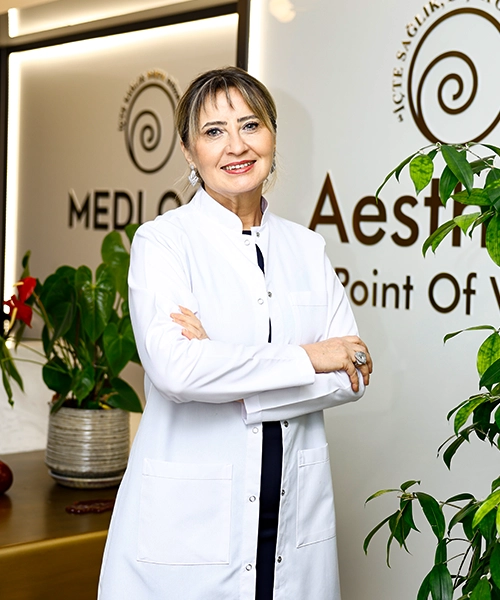
Dr. Handan Yavuz
MAKE AN APPOINTMENT