

Disadvantages of short hair follicles in eyebrow transplantation - Invisible Aesthetic Pitfalls of Classic FUE
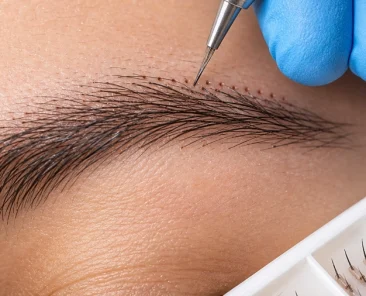
Eyebrows are one of the most critical aesthetic elements that determine the expression of your face, the meaning of your gaze and your overall facial symmetry. Therefore, any micro-surgical intervention in the eyebrow area requires much more artistic precision and technical expertise than standard hair transplantation. Traditional Classic FUE Eyebrow Transplant used in applications and taken by shaving the donor area 1-2 millimeters in length. disadvantages of short hair follicles in eyebrow transplantation, seriously jeopardizes the naturalness and aesthetic success of the results.
When our team, led by Dr. Handan Yavuz in our Nişantaşı clinic as Istanbul Eyebrow Transplant, analyzes the revision (correction) requests from patients, they see that the biggest complaints are the artifacts that occur after classical shaved FUE. The biggest problem with short hair follicles (grafts) is that the angle at which they are placed under the skin and the natural bending curve of the hair cannot be “verified with the naked eye or under a magnifying glass”. Since the root is the size of a pinhead and completely shortened, the direction of hair growth is largely based on a theoretical guess for the physician, which makes aesthetic errors inevitable.
Another major limitation of short hair follicles is that the depth of placement cannot be monitored live by the physician. Pushing the roots too far under the skin during transplantation (deep transplantation) prevents hair growth or leads to ingrown, ingrown hair and cystic formations under the skin. Roots left superficial are dislodged during the first wash. In unshaven Long FUE, the entire body of the hair allows us to adjust the depth like a scale.
“What Causes the ”Grass Man" Image?
The main reason for the unnatural eyebrow disasters that you can frequently see on the internet or in your environment, which grow steeply, exhibit a hedgehog appearance and are unnatural, is the faulty eyebrow transplantation applications with short roots and wrong angles. These problems, which we evaluate within the scope of the risks of shaved eyebrow transplantation, are caused by the following physiological and technical reasons:
- Angle Deviation during Skin Healing: The natural eyebrow hairs should grow slantingly just above the skin at an almost parallel angle (10 to 15 degrees). A graft transplanted short in classical FUE can easily change direction in the first 10 days after the operation due to the stretching of the tissue during the processes of skin shrinkage, crusting and edema. Since the hair is short, this deviation cannot be noticed until the healing is complete and the hairs begin to grow upright at 45-60 degree angles.
- Failure to Determine the Natural Curl Direction of the Hair: Each human hair has a genetically determined direction and curve. When the hair is cut to 1 mm in length, it is medically impossible to understand in which direction this curve bends. If the direction of curvature of the root is reversed, when the hair grows, your eyebrow will bend uncontrollably inward or outward, which can cause your eyelids to sink or distort the eyebrow form. raised eyebrows problem.
- Late Aesthetic Mistakes: In operations with short roots, you need to wait at least 6-8 months to understand whether the result is natural or not. After the shock shedding phase, the error only becomes visible when the hairs grow. In this process, the patient has to live with an artificial appearance for months and the correction process requires extra time and budget.
Graft Trauma (Crush Injury) and Root Damage at the Cellular Level
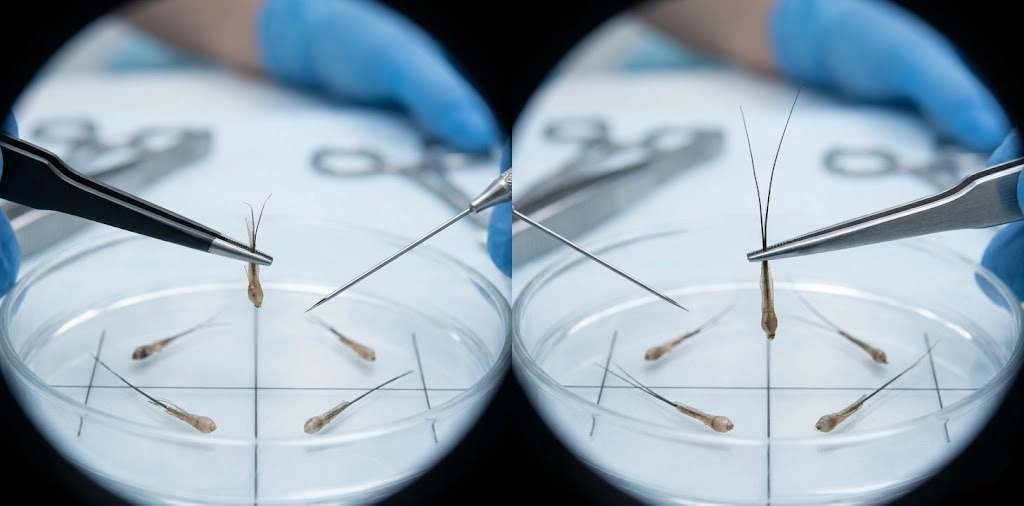
When analyzed at the surgical microscopic level, the mechanical stress to which the cells are exposed during the transplantation of short hair follicles is much higher. In the classical FUE method, after the grafts are separated from the nape of the neck, they are transplanted directly into the dermal papilla (dermal papilla), the most sensitive part of the root, with transplant tweezers (forceps).follicle base) and try to insert it into the canal. The slightest excess pressure applied during this placement causes a crush injury to the follicle, which we call “crush injury”. Crushed hair follicles have half the chance of holding under the skin or the capacity to produce healthy hair.
Oysa Long FUE tekniğinde, kökün kendisi yerine 2-4 cm uzunluğundaki kıl şaftı forseps ile tutulur. Kök hücresine hiçbir mekanik temas olmadan, kıl gövdesi bir kılavuz gibi kullanılarak kök kanala güvenle kaydırılır. Bu hücresel koruma avantajı, donör saç köklerinin canlılığını %98’e varan oranlarda korumasını sağlar. Kısa saç kökleri kullanıldığında ise köklerin fiziksel hasar görme ihtimali kaçınılmaz bir dezavantaj olarak cerrahın karşısına çıkar.
Mechanical Friction and Root Loss Risks during the Crusting Phase
The first 10 days of scabbing and healing after eyebrow transplantation is the most critical phase for the permanent fusion of the transplanted follicles to the tissue (neovascularization). Short hairs transplanted after classical FUE take up almost no space above the skin surface and do not form a physical barrier to protect the transplantation area. In this case, friction against the pillow during sleep, the slightest mechanical contact during putting on and taking off clothes, or pressurized water during face washing can cause the short roots to dislodge (graft loss) along with the crusts.
In the Long FUE method, long hair strands form a natural, flexible protective net over the transplanted skin area. Friction and contact impacts that may come from outside are first absorbed by the long hairs and are prevented from reflecting to the root level. In this way, the crusting phase is overcome by minimizing the risk of mechanical damage. The fact that short hair follicles lack this protection causes the patient to have an extremely stressful and restrictive healing process during the post-operative care period.
Revision Eyebrow Transplant Challenges: Getting it Right the First Time
“Revision” (correction) operations are much more complex and risky compared to an eyebrow transplant from scratch. Roots placed in the wrong direction or at too steep an angle must be removed one by one.
During this removal process, micro scar tissue may form in the transplantation area and irregularities may occur on the skin surface. In addition, since the viability of the extracted roots may be damaged, it becomes mandatory to take new grafts from the donor area. Therefore, choosing the right technique and specialist physician for the first operation is the most rational approach for both your health and your budget.
How Long FUE Eliminates These Disadvantages
Premium technology that completely eliminates all the aesthetic risks of short hair follicles and the need to shave Long FUE eyebrow transplantis. You can examine the differences between the aesthetic results of the two methods in our comparison table:
| Aesthetic Risk Factor | Short Hair Root (Classic FUE) | Long Hair Root (Long FUE) |
|---|---|---|
| Hair Exit Direction Control | Predictive, high risk of bias | Operasyon masasında %100 net ve görsel referanslıdır |
| Natural Curvature of the Bristle | Cannot be seen, the direction of the root is placed by chance | Precisely adjusted so that the curve direction is parallel to the skin |
| Destruction of the Donor Site | A specific area is completely shaved, difficult to hide | Zero Shave (Roots are selected one by one from long hairs) |
| First Visual Result | Pinhead-like punctate crusts and redness | Instant Full Eyebrow Design (Wires hide shells) |
| Need for Revision (Correction) | Aesthetic defects are quite high due to | Close to zero thanks to excellent angle control |
Frequently Asked Questions
No, constantly plucking the eyebrows with tweezers can cause the root to die completely and permanent gaps to form in that area. The best solution is to destroy the faulty roots with laser epilation under the supervision of a physician or to replant the roots at the correct angle with revision transplantation.
No, nape hair follicles retain their genetic character and continue to grow as thick as the area from which they were harvested. For this reason, it is imperative for naturalness that the thinnest, single hairs at the bottom of the nape are selected for the operation.
No, it is not. Shock shedding is only the fall of the hair shaft. Since the stem cell under the skin fuses to the tissue with the perfect slanted angle that it was planted on the first day, the new permanent eyebrows will grow with the perfect direction and angle you see on the first day.
The scabs formed after classical FUE usually fall off completely with regular washing within 10 days. However, since the hairs are very short, the transplantation area remains exposed during this 10-day period and is difficult to camouflage.
No, it is not. The long duration is a result of the delicate craftsmanship of the physician and the team. In the procedure performed under local anesthesia, the patient does not experience any loss of comfort or health risk, on the contrary, the naturalness guarantee is maximized.
After the first transplantation, at least 8 to 12 months should be allowed for the skin to heal completely, the edema to dissipate and the final orientation of the transplanted roots to become clear. A second intervention before this time has elapsed may increase tissue damage.
It is strictly forbidden to apply any chemical makeup to the transplant area for the first 1 month after the operation. After the roots are fully attached and the healing process is complete (after about 1-2 months), light make-up can be applied.
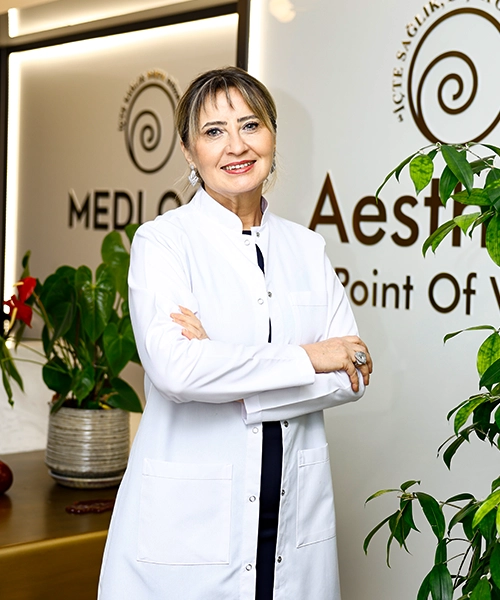
Dr. Handan Yavuz
MAKE AN APPOINTMENT