

Washing After Long FUE Eyebrow Transplant - First Wash and Scabbing Protocol After Long FUE Eyebrow Transplant
The success of any hair or eyebrow restoration operation depends not only on the quality of the micro-surgical intervention performed in the clinic. One of the most important factors determining the success of the operation is the care and cleaning routine that the patient will follow at home after the procedure. Especially in unshaven and long hair transplants, the attachment phase of the transplanted grafts is extremely sensitive.
At this point Washing after Long FUE Eyebrow Transplant The stages of transplanting are vital both to protect the health of the transplanted roots and to speed up the healing process. In this comprehensive guide, prepared by our team of experts led by Dr. Handan Yavuz, you will find all the steps that need to be taken from the first washing to the crusting phase in scientific detail.
After eyebrow transplantation, the microscopic channels formed on the skin surface and the body fluids leaking from them dry out and form structures called “micro crusts”. These crusts are a natural result of the skin's self-protection mechanism. However, these crusts need to be cleaned in a timely manner and with the right methods.
If the scabs remain on the skin for too long, they prevent the roots from breathing and interfere with the healthy growth process. On the contrary, if the scabs are scraped off prematurely and with harsh movements, hair follicles that have not yet fully adapted to the tissue can be uprooted. For this reason, the washing protocol for the first 10 days after the operation should be managed with extreme precision and control.
Cellular Biology Underlying the Washing Process
The micro channels opened during the operation are the nests where the hair follicles settle. During the first 48 hours, capillary connections are not yet complete in these nests. The roots are nourished by intracellular fluids in the surrounding tissues.
Meanwhile, the serum and minimal blood leakage dries and crusts in contact with air. Washing after Long FUE Eyebrow Transplant The main scientific aim of the protocol is to soften and remove these scabs from the tissue without damaging the skin and grafts.
Special lotions used in the first wash soften and dissolve dried clots and cell debris. Ingredients such as panthenol, allantoin and aloe vera in these lotions support the barrier function of the skin, reduce edema and trigger cell regeneration. Special shampoos used afterwards purify the area from pathogenic microorganisms and reduce the risk of infection to zero.
Keeping the skin clean makes it easier for the hair follicles to get the oxygen support they need. To have information about the stages of hair follicle attachment in this process First two weeks after Long FUE Eyebrow Transplant You can also review our article.
Step-by-Step Clinical and Home Washing Protocol
The washing protocol applied in our clinic consists of steps divided into days to ensure that the process is error-free. Adhering to these steps is the biggest key to the growth of the transplanted eyebrows without any waste.
Phase 1: First wash in the clinic (48th hour postoperatively)
The first washing should never be done by the patient at home. On the 2nd day of the operation (48 hours later), our patient is invited to our clinic.
Dr. Handan Yavuz and our expert team first examine the transplant and donor area in detail. After examining the placement of the roots, tissue compatibility and possible signs of infection, the first wash is started. The procedure is carried out in the following steps:
- Lotion Application: A special medical lotion that softens the skin is applied to the transplanted eyebrow area and donor nape area. The lotion is left on the transplantation area for about 20-30 minutes. This waiting time is necessary for the hard crusts to soften completely.
- Decontamination and Rinsing: The lotion is washed off with warm and absolutely unpressurized water. Make sure that the water flow does not hit the eyebrows directly, but filters through the forehead.
- Shampooing The specially formulated, chemical-free shampoo is foamed in the palm of the hand and applied to the planting area with light touches (pat-pat movement) with the cushion parts of the fingertips. Absolutely no rubbing, scrubbing or scratching.
- Final Drying After the washing is complete, the area is left to dry on its own or dehumidified with a sterile paper towel by gently patting it. Normal cotton towels are not used as they leave fibers and can get caught in the graft.
Phase 2: Home Washing Process (Days 3 to 7)
After the first wash in the clinic, our patients continue washing themselves at home, once a day. The rules to be followed at home are as follows:
When washing at home, you should pay close attention to the temperature and pressure of the water. Pressurized water coming directly from the shower head can dislodge the roots. Instead, with the help of a clean bowl or glass, you should soak your eyebrows by slowly pouring warm water down your forehead.
You should apply the lotion in a thin layer and leave it on for 20 minutes, then rinse it off with the same method. It is enough to foam the shampoo in your hand and put the foam on the eyebrows and touch it lightly. You should also rinse slowly and dry with a sterile paper towel.
Stage 3: Scab Shedding Period (Days 8 to 10)
From day 8 onwards, the scab shedding phase begins. The aim of this phase is to ensure that the softened crusts fall off. During washing, light circular massage movements are started with fingertips. These massages help the crusts to exfoliate.
At the end of the 10th day, it is aimed to have no scabs left in the eyebrow area. If there are still stubborn crusts that do not fall off at the end of the 10th day, our clinic should be contacted and support should be obtained to remove them without difficulty.
Comparison of Techniques: FUT, Classic FUE and Long FUE Care Differences
You can examine the technical differences in the healing and washing processes of different eyebrow transplantation methods in the comparison table below:
| Maintenance Parameter | FUT Method (Stitched) | Classic FUE (Shaved) | Long FUE Method without shaving |
|---|---|---|---|
| First Wash Time | 72 hours after the operation (delayed due to the suture site). | It is performed 24-48 hours after the operation. | 48 hours after the operation is done safely in a clinical setting. |
| Donor Area Cleaning | The suture line should be dressed every day and kept sterile. | The crusting of the shaved open area is intense, washing requires attention. | Because the hair is long. provides protection during washing, easy to maintain. |
| Crusting Amount | Moderate, but scabbing is thicker at the seams. | Due to the wide canals, the crusting is dense and difficult to shed. | Using 0.6 mm micro punch minimal crusting it happens. |
| Shell Pouring Time | It can take up to 14-21 days with the removal of stitches. | It takes 10 to 12 days. | Within 7 to 10 days The shells are completely shed and cleaned. |
| Special Care Products | Antibiotic creams, suture gels and antiseptic solutions are needed. | Standard foams and shampoos are used. | Cell regenerating, pH balanced special solutions and foam shampoos are used. |
As the table shows, the Long FUE technique has the shortest shedding time and the least laborious maintenance process. If you would like to explore the challenges and shaving requirements of traditional methods in more detail Classic FUE eyebrow transplant page for more information. To get information about the post-operative cost and the content of the care sets Long FUE eyebrow transplant prices You can check our page.
The 5 Most Critical Mistakes in the Washing Process (Mythology vs. Reality)
Mistakes (myths) in the field of medical aesthetics can put the healing process of patients at risk. Dr. Handan Yavuz explains the common mistakes made during the washing process with scientific facts:
MYTH 1: “The more I rub during washing, the faster the scabs fall off and the roots relax.”
Reality: Rough rubbing during the first 7 days will cause the roots to dislodge. The bark should soften and fall off on its own, it should never be forced.
MYTH 2: “Baby shampoos are the most natural, baby shampoo should be used after eyebrow transplantation.”
Reality: The pH values of baby shampoos may not be suitable for adult scalp and open wound healing. After the operation, medical shampoos given by our clinic that support tissue repair should be preferred.
MYTH 3: “Hot water opens the pores and allows the roots to feed better.”
Reality: Hot water dilates capillaries, increasing the risk of bleeding and causing edema. The washing water must be absolutely lukewarm (room temperature).
MYTH 4: “Moisturizing creams should be applied liberally to the eyebrows to prevent itching after washing.”
Reality: Creams with a thick consistency clog the pores, depriving the hair follicles of oxygen and predisposing them to folliculitis (root inflammation). Only recommended light lotions should be used.
MYTH 5: “Falling hairs during the scab process indicate that the transplant has failed and the roots have not taken hold.”
Reality: The hairs that fall out with the scabs are actually broken hair shafts. Stem cells are safe under the skin. To learn more about this natural process Long FUE Eyebrow Transplant shock shedding you can read our guide.
Long Term Eyebrow Health and After Wash Care
Once the scaling process is complete (day 10), you can include your eyebrows in your normal daily cleansing routine. However, for the first 3 months, you should pay attention to the following points to support the development of the newly planted roots:
When combing your eyebrows after washing your eyebrows, you should definitely use a soft-bristled eyebrow brush and comb in the natural direction of the eyebrow. Hard plastic combs or rough movements can damage the roots. In addition, you should not hold the hair dryer directly on your face after bathing, and if you do, you should apply it in cold blowing mode and from a distance.
To prevent the skin from becoming dehydrated, you can apply a good quality moisturizer around the eye area without touching the eyebrow area. From the 3rd month onwards, you can use the vitamin supplements recommended by your physician for strengthening the roots and healthy growth of new hairs or mesotherapy you can evaluate your sessions. Remember that the right care and washing protocol is integral to a successful Long FUE operation.
Selection of Products Used in the Washing Process
The success of the washing protocol after Long FUE Eyebrow Transplantation is closely related to the correct selection of the products used. Skin-softening lotions and chemical-free shampoos allow the scabs to dissolve without damaging the graft.
Ordinary products sold in supermarkets can irritate the sensitive area because they contain perfumes and sulfates. That's why we recommend which products to use individually.
Choosing the right product is as important as using the right amount. Over-application can cause more irritation than benefit; we share this balance with you.
Travel and Busy Wash Layout
A business trip or a busy schedule should not disrupt your washing routine. For trips in the early days of the process, we recommend preparing a practical care kit that you can carry with you.
You can apply the same gentle washing principles in a hotel or other environment; the important thing is to control the water pressure and temperature.
If you share your plans with us in advance, we will work out a washing program that fits your travel schedule. Flexibility can be achieved without compromising the quality of the recovery.
Common mistakes during the scab period
The scaling phase is when patients make the most mistakes. The most common mistake is to impatiently pick off the scabs with a finger or fingernail. This can dislodge roots that have not yet taken hold.
Another mistake is to try to wash the scabs with hard water without softening them. Scabs that are not softened with lotion become stubborn and strain the graft.
The right method is a patient and gentle approach. The shells should be shed in their own time, with light touches after softening. Managing this period correctly directly protects the success of the planting.
Post-Wash Moisturizing and Skin Care
Completion of the washing process does not mean the end of care. After the scabs have fallen off, the skin remains sensitive for a while and needs gentle moisturizing. Supporting the skin barrier with the recommended products helps the redness go away faster.
Skin products containing alcohol or perfume should be avoided during this period; they can irritate the newly healing tissue. Simple and restorative ingredients should be preferred.
We tell you when and how to apply the moisturizing routine one by one. Proper skin care protects the aesthetic result of the transplant in the long term.
Patient Responsibility and Clinical Support in Washing
Although the first wash is done at the clinic, you are largely responsible for the following days. This is not a cause for concern, but rather a way to keep control of the process. A properly explained protocol makes it much easier to follow at home.
We show each step step by step and support you with a visual or written guide if necessary. If you have any questions, you can contact us and get confirmation without hesitation.
This shared responsibility both accelerates healing and makes you an active part of the process. A washing regimen that combines clinical support with patient care yields the healthiest results.
Knowing that you are not alone during the process is as valuable as technical information. Our door is always open when you need us.
The washing process after Long FUE Eyebrow Transplantation, combined with the right products, a gentle technique and a patient approach, directly ensures the success of the transplantation. You are not alone in this process where clinical support and patient care go together. We will explain each step step by step and be with you when you need us. A properly managed washing period is the most solid foundation for your eyebrows to grow naturally and without any waste.
Frequently Asked Questions
The first wash in the clinic is not just a cleaning procedure. The physician and our team of specialists check the condition of the transplanted roots, observe the healing rate of the tissue and intervene professionally to prevent possible complications. Therefore, it is essential that the first wash is performed in the clinic.
Lifting or scraping the scabs with a fingernail causes the hair root (graft), which is not yet fully attached under the scab, to dislodge and permanent gaps to form in that area. It also increases the risk of infection and may leave scars.
Yes. After the scabs fall off, the fresh skin tissue underneath is pink in color. This pink appearance indicates that the skin is renewing itself and the blood circulation is active. It will match your skin color in a few weeks.
No, it does not. Normal soaps have a high pH value, which dries and stretches the skin and makes it difficult for the scabs to fall off. Medical washing foams with a pH of 5.5 provided or recommended by our clinic should be used.
The donor area is more resistant than the eyebrow area. During washing, lotion can be applied and left on for a while, then gently massaged with the palm of the hand. Massaging with circular movements to remove the crusts on the nape of the neck accelerates healing.
It is only the hair stems that are shed with the scabs during washing. The stem cells that produce the hair follicle have settled in their nests under the skin. Therefore, after the shock shedding phase, new and healthy eyebrows will grow from these follicles.
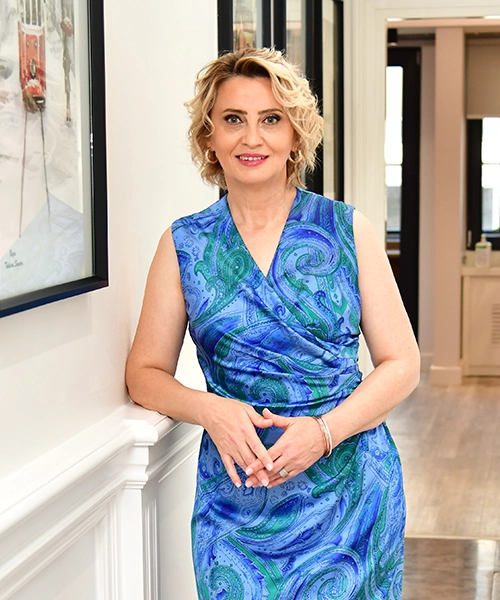
Dr. Handan Yavuz
MAKE AN APPOINTMENT