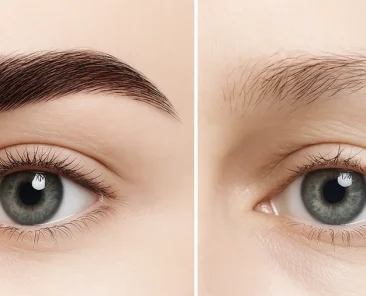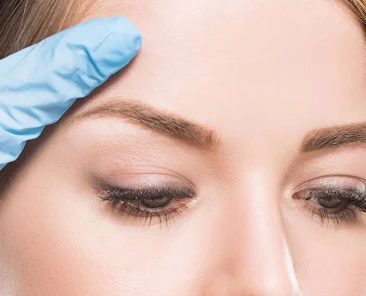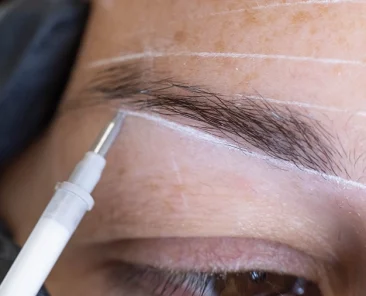


Graft Selection in Eyebrow Transplantation — The Biology of Natural Eyebrow Structure and Hair Thickness Criteria
The most important factor determining the natural appearance of eyebrow transplant procedures is how well the transplanted hairs blend with the original tissue structure of the eyebrow area. The hair strands on the human scalp and the eyebrow hairs on the face are structurally quite different from one another. While scalp hair is generally thicker, coarser, and grows in clusters, eyebrow hairs are much finer, softer, and always consist of single follicles. Therefore, the most critical technical step in a successful eyebrow restoration is determining which hair follicles to harvest from the donor area. graft selection in eyebrow transplantation is a process.
Performed at our clinic under the leadership of Dr. Handan Yavuz Long FUE In (non-shaving eyebrow transplantation) procedures, random hair follicle extraction is never performed. Instead, under a microscope, fine hairs that most closely match the diameter and structure of the eyebrow are individually selected from among the thousands of hair strands in the donor area at the back of the head. Selecting the wrong hair follicles results in thick, coarse, and uncontrollably growing eyebrows after healing. In this article, we will examine, using scientific data, how the hair follicles most suitable for the eyebrow structure are identified, the details of microscopic graft analysis, and the direct impact of this precise selection on aesthetic outcomes.
Why Is Root Diameter Analysis So Important? The Difference Between Hair and Eyebrows
Differences in the diameter of scalp and eyebrow hairs at the micron (micrometer) level directly affect the natural appearance of the aesthetic result. A typical scalp hair is on average 60 to 80 microns thick. In contrast, the thickness of a natural eyebrow hair is only around 30 to 40 microns. If the thickest and strongest hair strands from the nape of the neck are taken and transplanted into the eyebrows, a coarse, stiff, and unnatural appearance will result after healing.
To achieve a natural-looking result, the following areas in the donor site are targeted:
- Behind the Ear (Mastoid Region): The hair in this area is much finer and softer than the hair at the back of the head. It is the preferred choice for eyebrow transplants.
- Lower Neck Line (Neckline): The fine, hair-like strands at the very bottom of the hairline are ideal for creating a feathered effect at the start and end points of the eyebrows.
- Upper Occipital Area Reserve: The relatively more developed hairs in this area can be used to a very limited extent to enhance the volume and density of the inner part of the eyebrow.
Harvesting hair follicles using circular punches without damaging the skin promotes rapid healing of the donor area. For detailed information about the post-procedure process, eyebrow transplant donor site healing you can read our guide.
Isolation of Single Grafts and Microscopic Examination
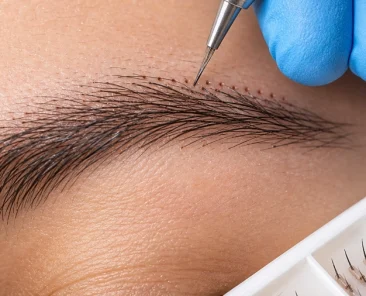
The vast majority of hair follicles on the scalp are double, triple, or quadruple follicular unitare in clusters. In the eyebrow area, however, multiple hair follicles do not naturally occur. Therefore, the grafts harvested from the donor area must be carefully separated into single units under a microscope in order to be used for eyebrow transplantation.
At our clinic, the harvested multi-follicular units are separated into individual units using special micro-scalpels, without damaging the vitality of the follicles or the surrounding protective tissue (perifollicular adipose tissue). This procedure requires a high degree of manual dexterity and patience. If multiple hair follicles are transplanted directly, a "brush-like" appearance forms on the eyebrow, and the natural aesthetic is completely lost.
In the FUT technique used in previous years, this separation process resulted in tissue loss and left a scar on the back of the head; for more details on this fut eyebrow transplant nape scar You can find this information in our article. Today, however, these issues have been completely resolved with sutureless FUE and Long FUE.
The Advantages of Selecting Healthy Grafts Using the Long FUE Method
The Long FUE technique offers a unique advantage in graft selection because it allows for the extraction of hair in long strands without cutting the hair short. Traditional Classic FUE eyebrow transplant Since the donor area is shaved in this method, only the root portion remaining beneath the skin is visible. In this case, it is impossible to analyze the thickness, color, and direction of the hair shaft in advance.
With the Long FUE technique, since hair is harvested while preserving its original length of 1–2 cm:
- The exact thickness and structure of the hair are clearly determined before the purchase is made.
- The white or gray hairs among the strands of hair are easily identified and removed.
- Since the natural curve of the hair is clearly visible during the transplant procedure, the hair is placed to match the natural slope of the eyebrow.
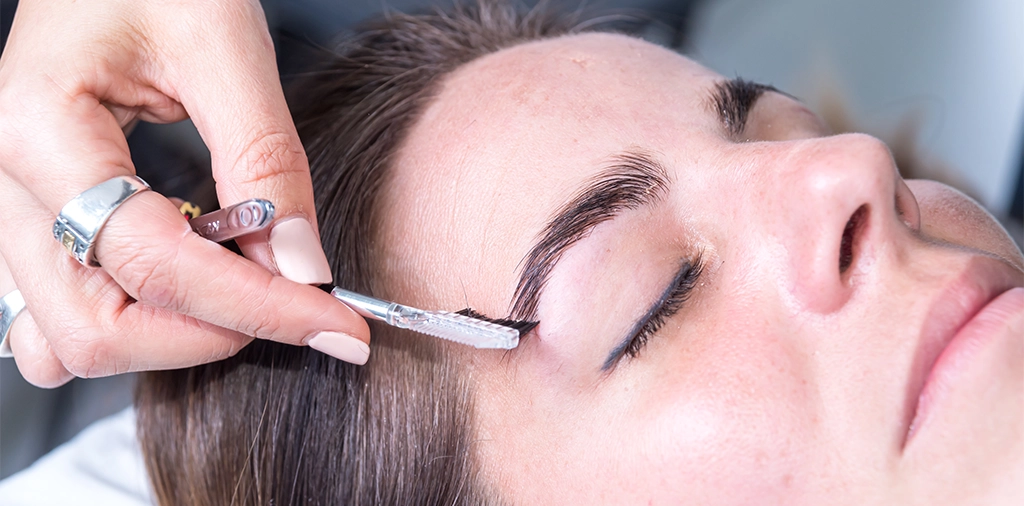
Suitability Levels of Donor Areas for Eyebrow Transplantation
The table below compares different donor areas on the nape of the neck and scalp in terms of hair diameter, single-graft ratio, and suitability for the eyebrows:
| Donor Site Location | Average Hair Diameter (Microns) | Natural Single Graft Ratio | Eyebrow Matching Level | Primary Application |
|---|---|---|---|---|
| Behind the Ear (Mastoid) | 40–50 µm | Yüksek (%70-80) | Perfect | Eyebrow body and arch area |
| Lower Back (Neck) | 30–40 µm | Çok Yüksek (%90) | Perfect (Feathery Texture) | The start of the eyebrow and the tip of the tail |
| Mid-Occipital Region | 60–70 µm | Orta (%40-50) | Medium (Requires sorting) | Only in people with naturally thick eyebrows |
| Temporal Region | 45–55 µm | Yüksek (%65-75) | Good. | Alternative donor site reserve |
As can be seen from the table, the area behind the ear and the lower nape are the most valuable graft sources for achieving the ultra-natural results sought in eyebrow transplantation. At our clinic, through precise harvesting from these areas, we achieve results that are indistinguishable from the patient’s original eyebrow structure.
The Role of Age and Gender in Graft Selection
In eyebrow transplantation, graft selection is not limited solely to root diameter; the patient’s age and gender also directly influence the design. While a finer, softer, and more curved structure is aimed for in female patients, a fuller line that closely follows the bone structure is preferred in male patients.
As you age, the hair texture in the donor area may become finer or turn gray. In such cases, we create a uniform distribution of the hair follicles across the surface to maintain color consistency. This prevents a patchy appearance in the eyebrows.
In younger patients, hair follicles are more firmly anchored, but the design must also take future changes in facial structure into account. Dr. Handan Yavuz plans graft selection not just for your current appearance, but with your face ten years from now in mind.
The Impact of Graft Quality on Long-Term Outcomes
In eyebrow transplantation, success is measured not only by the number of grafts transplanted but also by the quality of the selected hair follicles. Healthy, appropriately sized hair follicles that retain their vitality have a higher survival rate after transplantation and result in a natural appearance.
Minimizing damage to the surrounding tissue when harvesting grafts from the donor site directly affects the graft’s viability. For this reason, we perform the harvesting process meticulously under a microscope, without rushing.
A properly selected graft adapts to the eyebrow area over the years, eventually blending in with its natural structure. The care taken during graft selection makes a difference in quality that becomes apparent not just in the first month, but several years later. Lasting naturalness lies in these subtle details.
In eyebrow transplantation, graft selection is a key factor that determines both the natural appearance and longevity of the results. When roots of the correct size and with preserved vitality are used, the eyebrows blend more naturally with your facial features over time. That is why we take our time during the harvesting and implantation stages.
Each selected hair follicle is separated according to the structure of the target eyebrow area and placed in the appropriate direction. This meticulous attention to detail results in a quality that becomes apparent not just in the first few months, but even years later.
Frequently Asked Questions
Although the hair on the arms or legs may appear finer, the anagen (growth) phase of these hairs is very short, and they fall out quickly after being transplanted. Hair follicles, on the other hand, are permanent and adapt to the eyebrow area over time.
No, during the separation process—performed by experts using high-resolution microscopes—the vital parts of the follicle (the bulge region) are preserved, so the implantation rate is not affected.
The transplanted hairs gradually become somewhat thinner as they adapt to the blood circulation and hormonal makeup of the eyebrow area. However, hairs that are initially transplanted very thickly can never fully revert to the natural, fine texture of eyebrow hairs.
Although this varies depending on the extent of hair loss in the eyebrow area, implanting 200 to 400 individual, fine grafts is generally sufficient to achieve a natural look.
Yes, making microscopic selections among unshaven, long strands of hair requires more time and precision. However, the natural results are well worth the effort.
Yes, if a person has gray hairs in their eyebrows or if the goal is to match their hair color, gray hairs from the donor area can be selectively transplanted.
Dr. Handan Yavuz
MAKE AN APPOINTMENT